
Work
Cognito
- Client
- Cognito
- Services
- PlatformDataGrowth marketingAI tooling
- Since
- September 2026
- Website
- cognitosearch.com
Cognito makes webshops and service businesses findable in Google and in the answers of ChatGPT, Claude and Perplexity. Since September 2026 MOVE has built it from the first commit: the website in Dutch and English, a scan that measures how AI sees a business, and the inbox where every request lands.
The challenge
When we started in September 2026, Cognito was an offer and a question that every business owner now asks: when a customer asks ChatGPT for a recommendation, am I in the answer? There was no website, no way to show a prospect where they stand, and nothing anyone could check. Selling AI visibility on a promise would have been a guess.
The result
Three days later cognitosearch.com was live in two languages. A month in, any business can see in two minutes how often ChatGPT, Claude and Perplexity name it, who they name instead, and where it stands in Google: measured, dated and sourced, without a score.
68
pages live in Dutch and English
18
AI answers in every scan
5
automations live
24
pull requests merged
Behind the scenes
Back-end,
automated
- One database for every request, scan and booking.
- A scan that runs its steps on its own, with retries, in about two minutes.
- Two mails out within minutes of every request: one to the team, one to the requester.
- A daily budget on paid AI and search calls, so a busy day can’t run up a bill.
- Requests kept for 90 days and IP hashes cleared after 48 hours, with five automations watched.

In front of the client
Front-end,
scaled
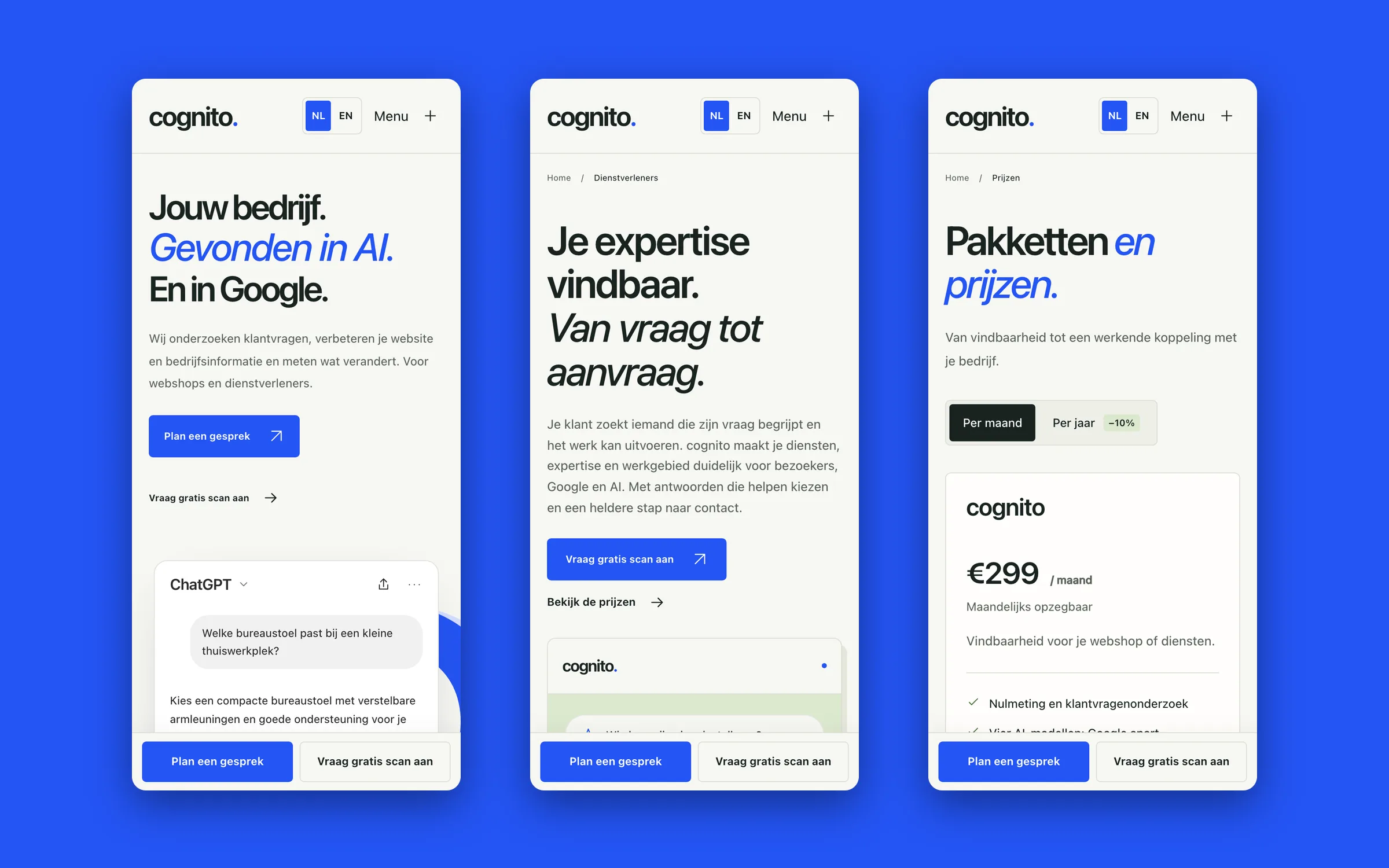
- A website of 68 pages in Dutch and English, rendered on the server and fast.
- Landing pages for webshops and for service businesses.
- Eleven articles and three free tools, from an ROI calculator to a content planner.
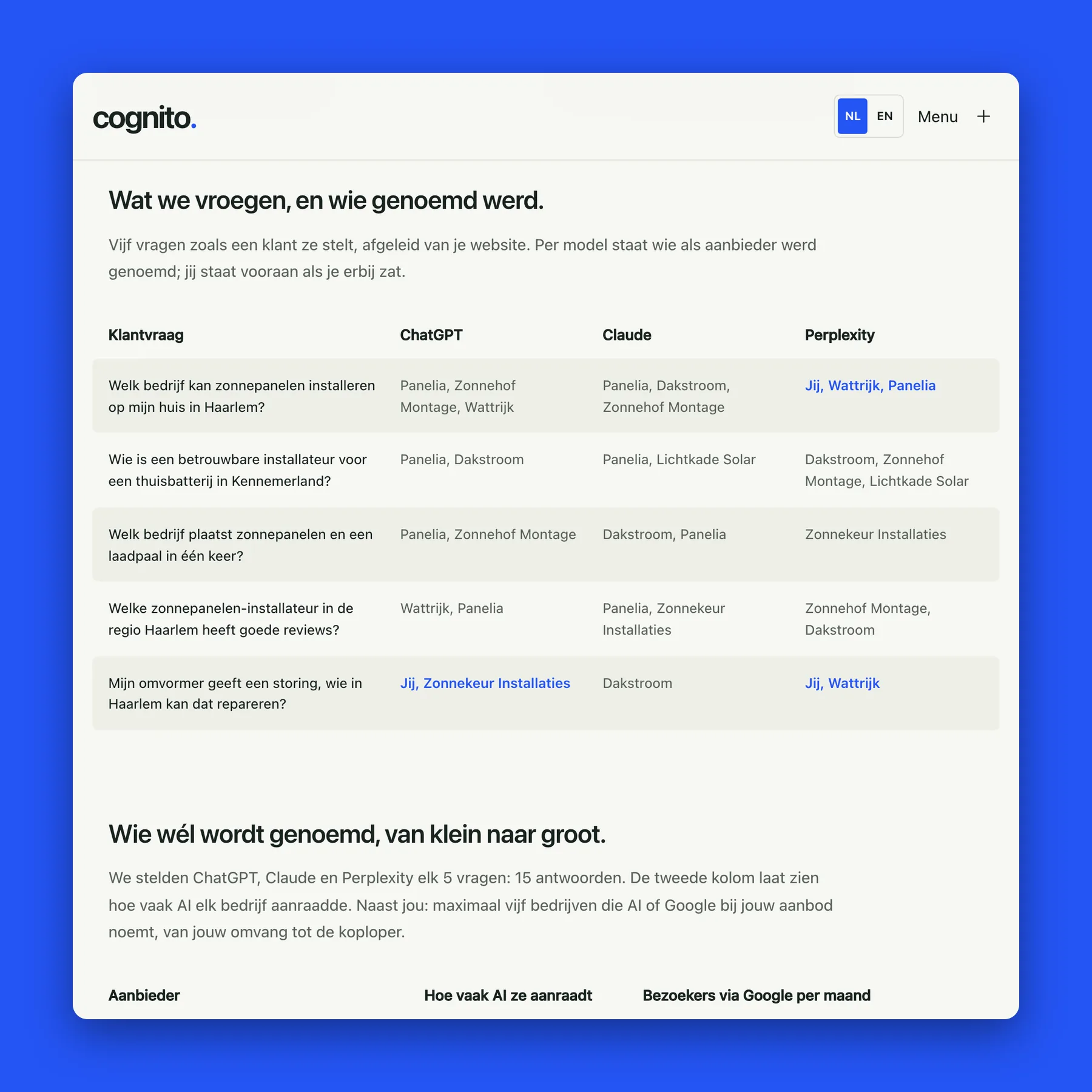
- A free scan that shows what ChatGPT, Claude and Perplexity say about a business.
- Structured data on every page, so Google and AI read the same facts.
- Prices on the page, from €299 a month, and a clear route to a call.

One core
Everything Cognito knows sits in one database on its own Cloudflare account: every request, every scan with the raw answers behind it, and every booking. The website writes to it, the scan writes to it, and the team reads from it. No tool writes to another tool directly.
- Requests and scans come in through the website, behind an origin check, a honeypot and a daily limit per connection.
- The scan runs as a workflow: read the site, profile the business, check Google, ask the AI engines, rank the competitors, write the report.
- The team’s inbox reads the same rows over a private link that the internet can’t reach.
Integrations
Three systems are live, each with one job and one direction, and two more are built and waiting to be switched on.
- Out: Claude reads a business’s website and writes its profile. DataForSEO brings the Google results and the answers of ChatGPT, Claude and Perplexity. Resend sends the mails.
- Both ways, built and waiting: Cal.com, to book a call on the page and record every booking.
- Out, built and waiting: Plausible, for cookieless analytics with seven named events.
There is no pixel and no tracking cookie. What Cognito counts, it counts in its own database.
Internal tooling
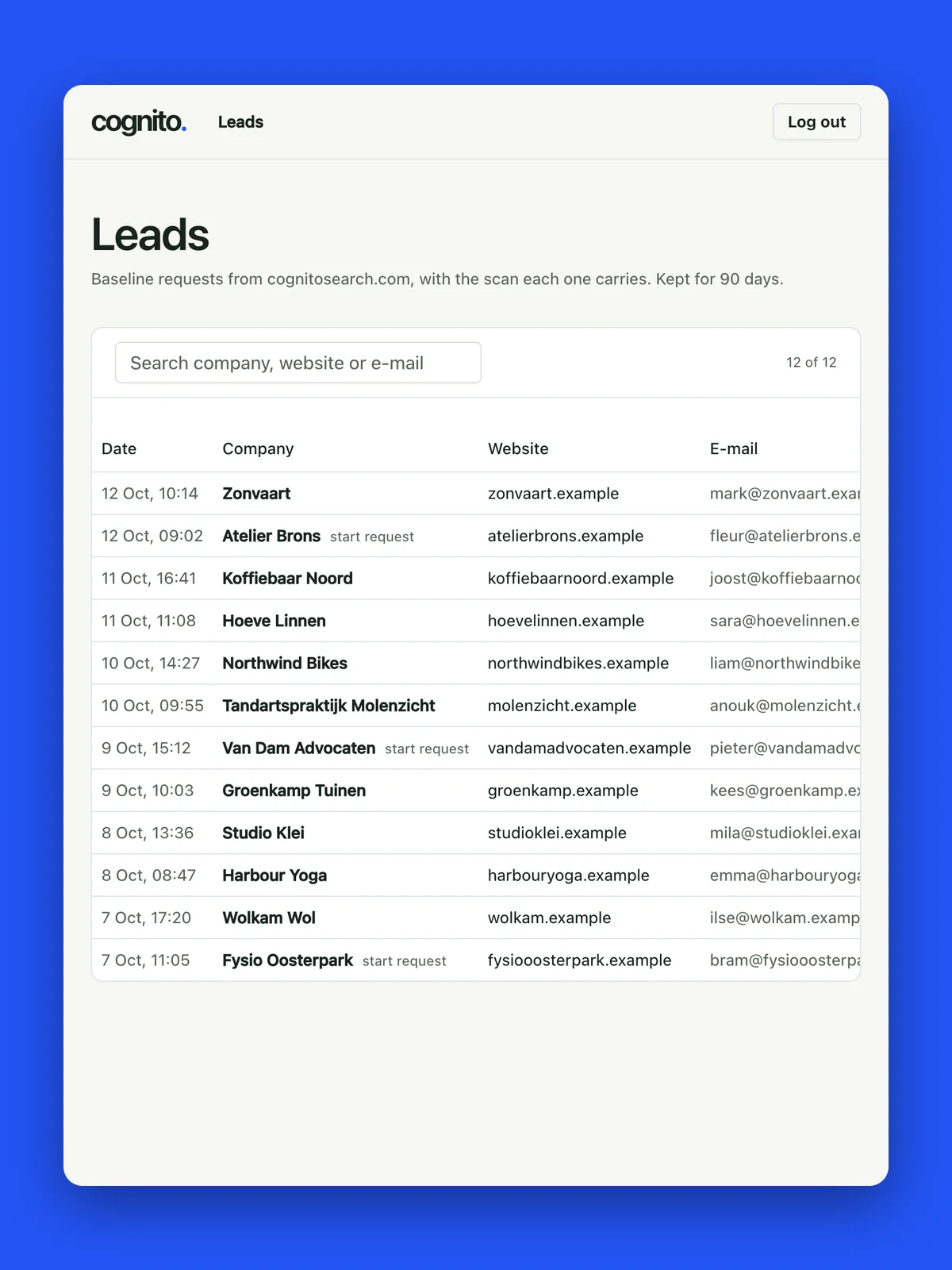
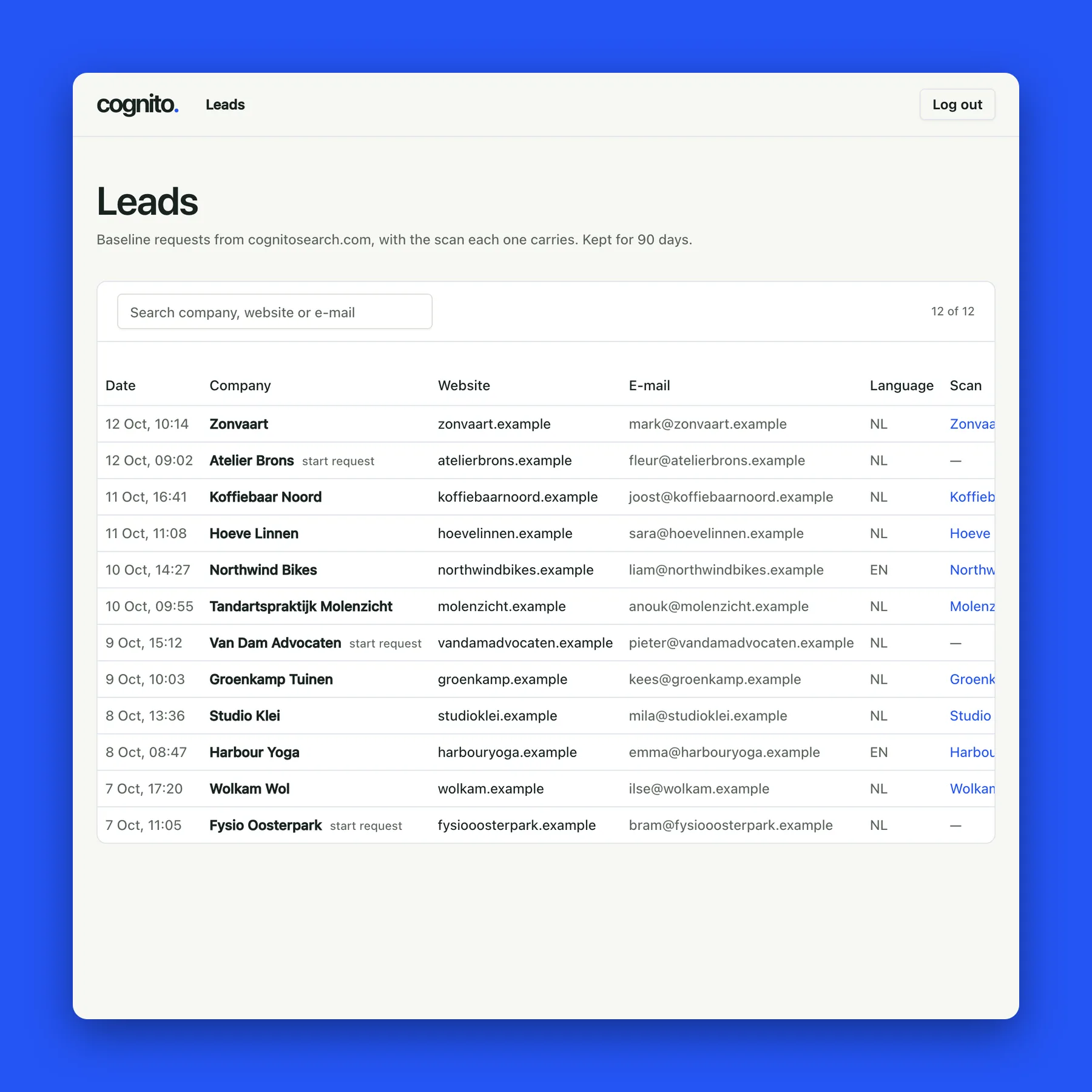
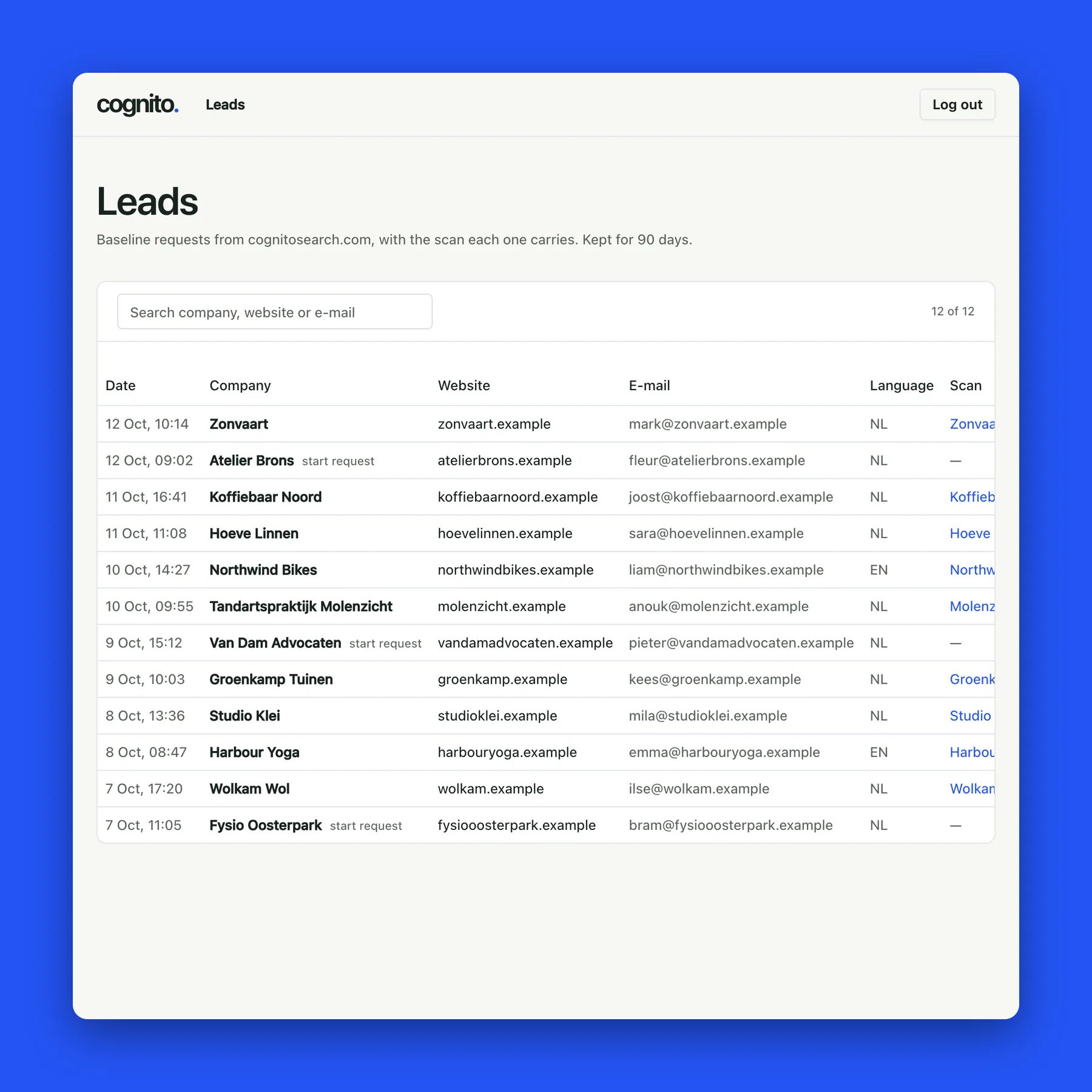
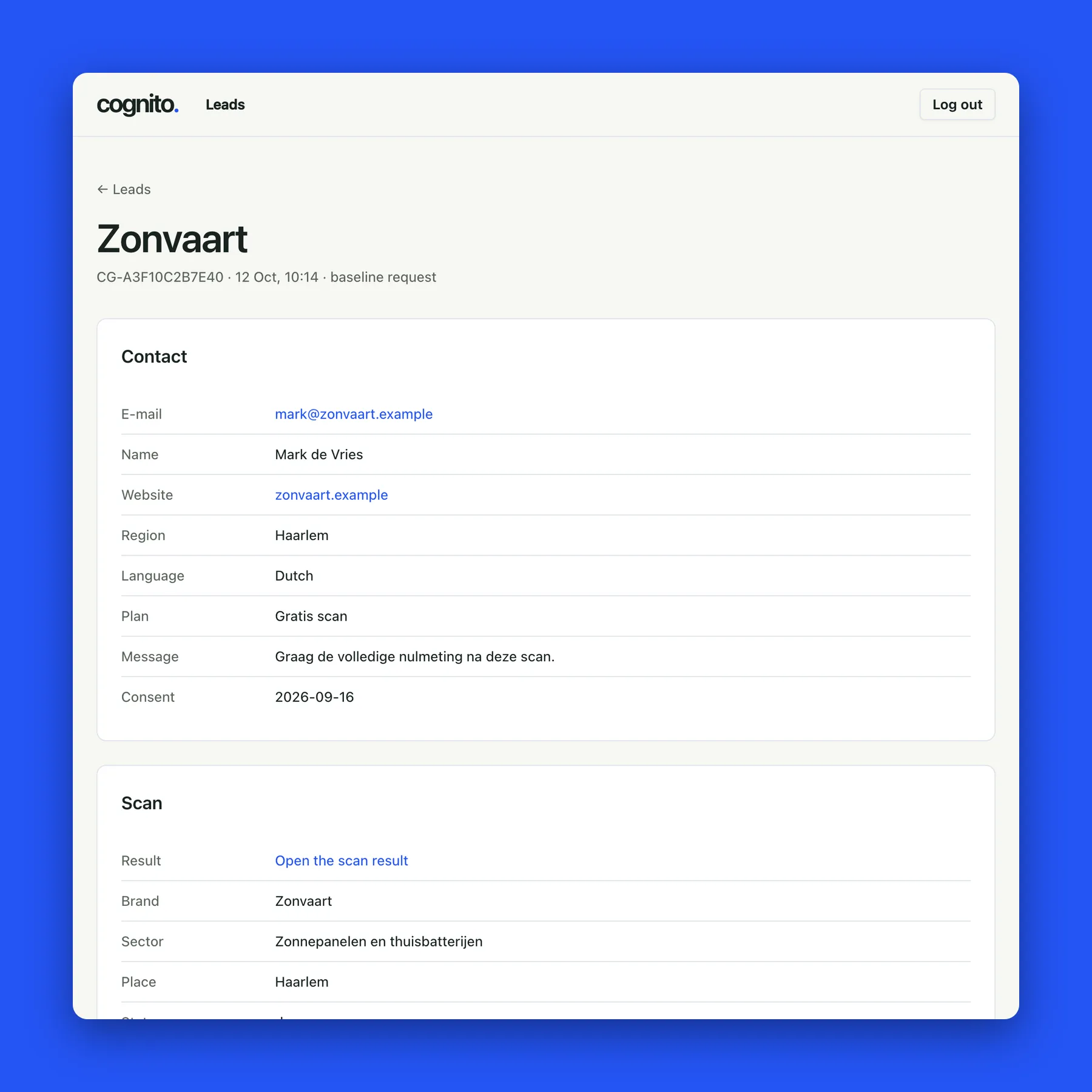
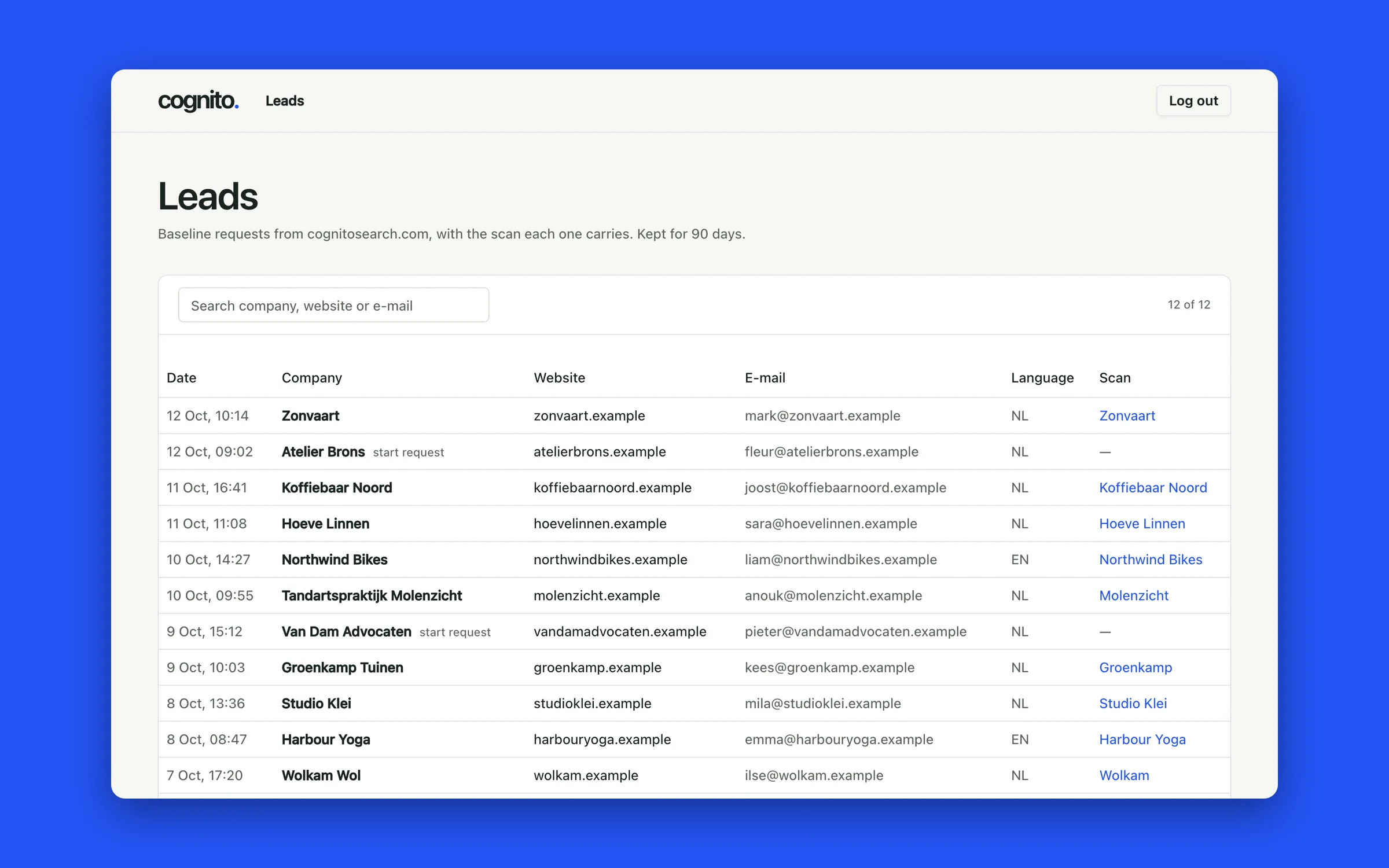
The team works from one inbox behind a login. Every request lands there with the company, the contact, the language and the scan it carries, one click from the full result. In October the inbox was cut back to exactly that; the earlier client reports and paid analysis are archived, ready to restore.
Releases go out the same way every time: a version tag starts a check of the database schema, a restore point, the migrations, the deploy and a test of the live site.
The toolkit
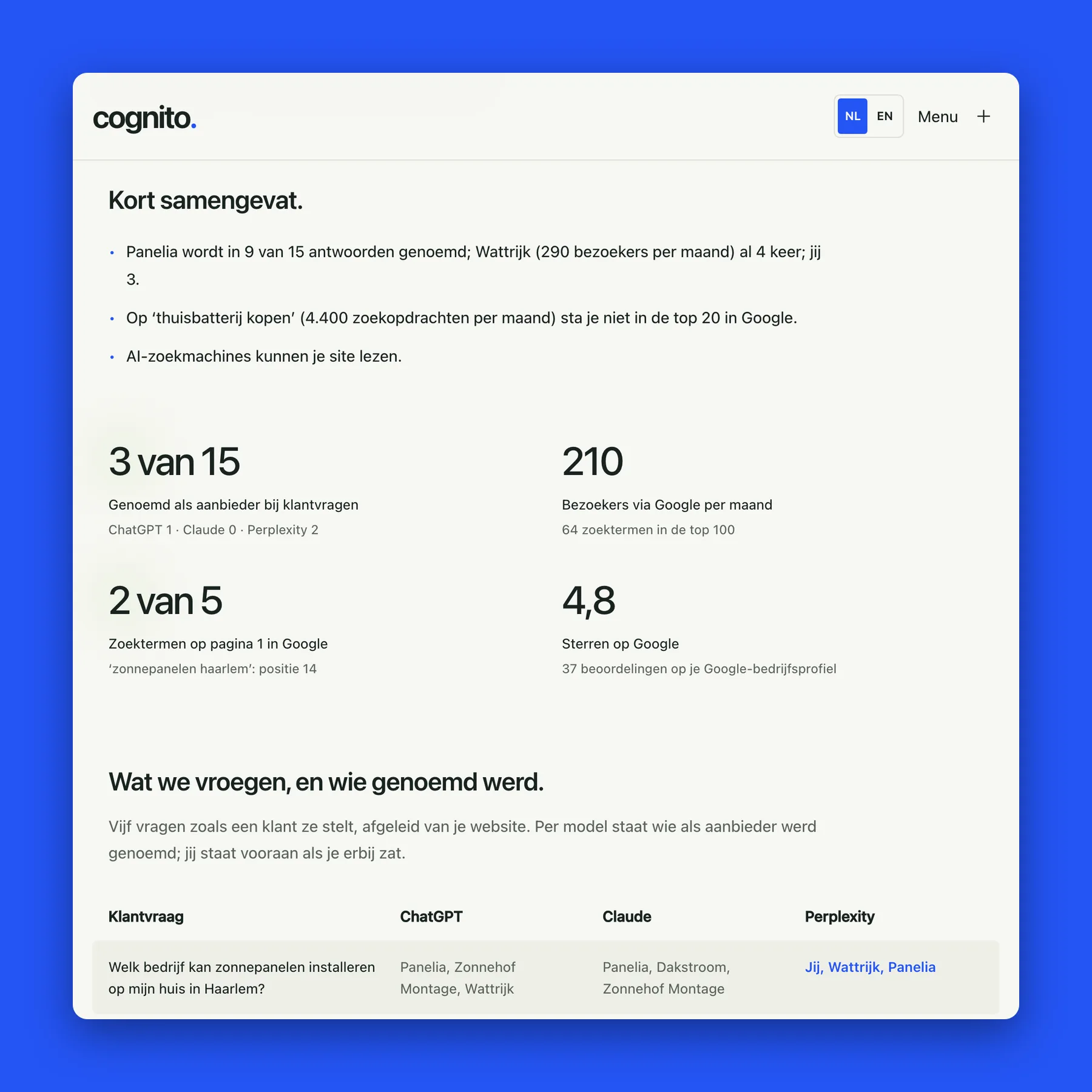
A website in, a dated report out: what AI reads on the site, how often it is named, and where it stands in Google.
Five customer questions and one brand question, asked to ChatGPT, Claude and Perplexity, with every name they give.
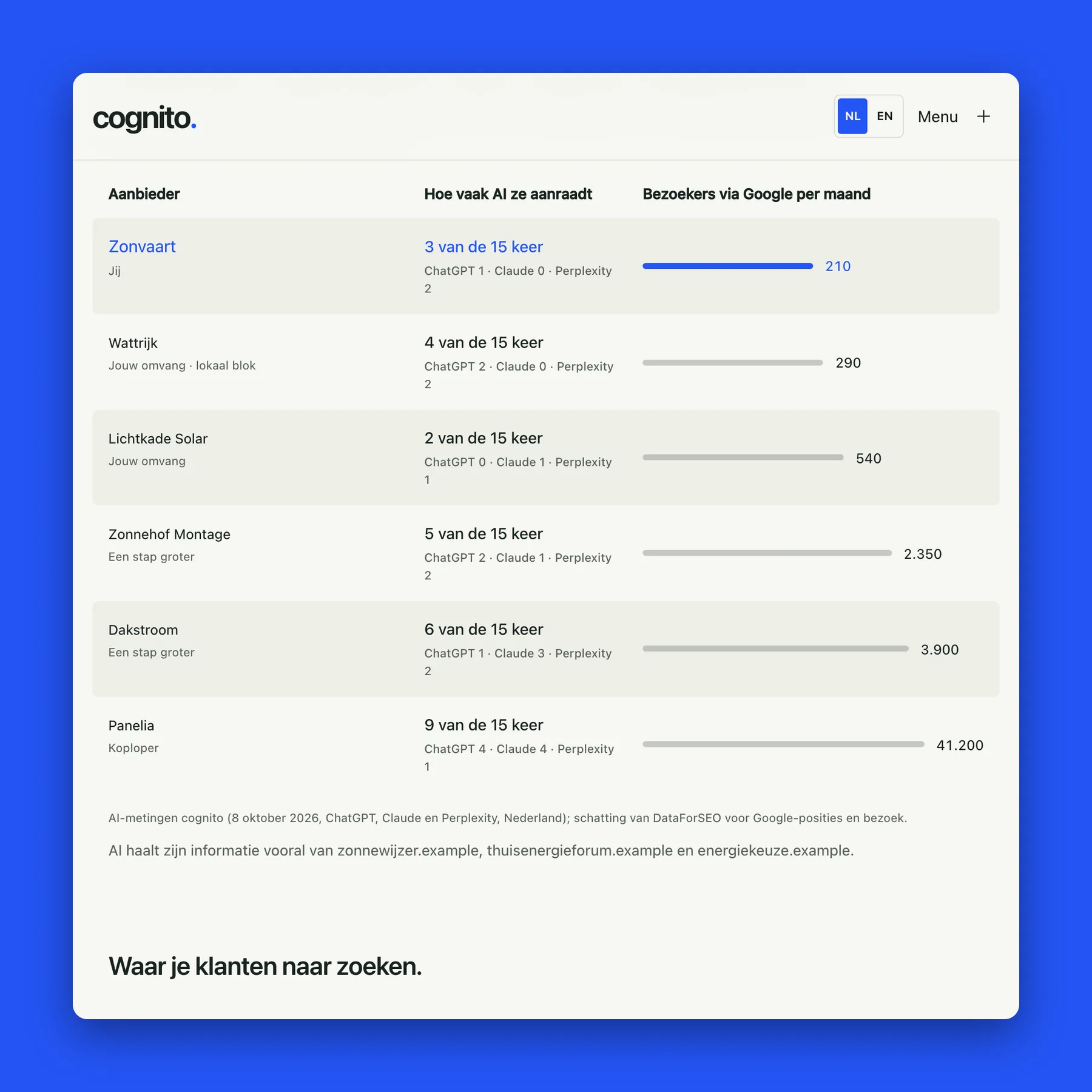
Who AI names instead, from the same size up to the market leader, with their Google visitors next to it.
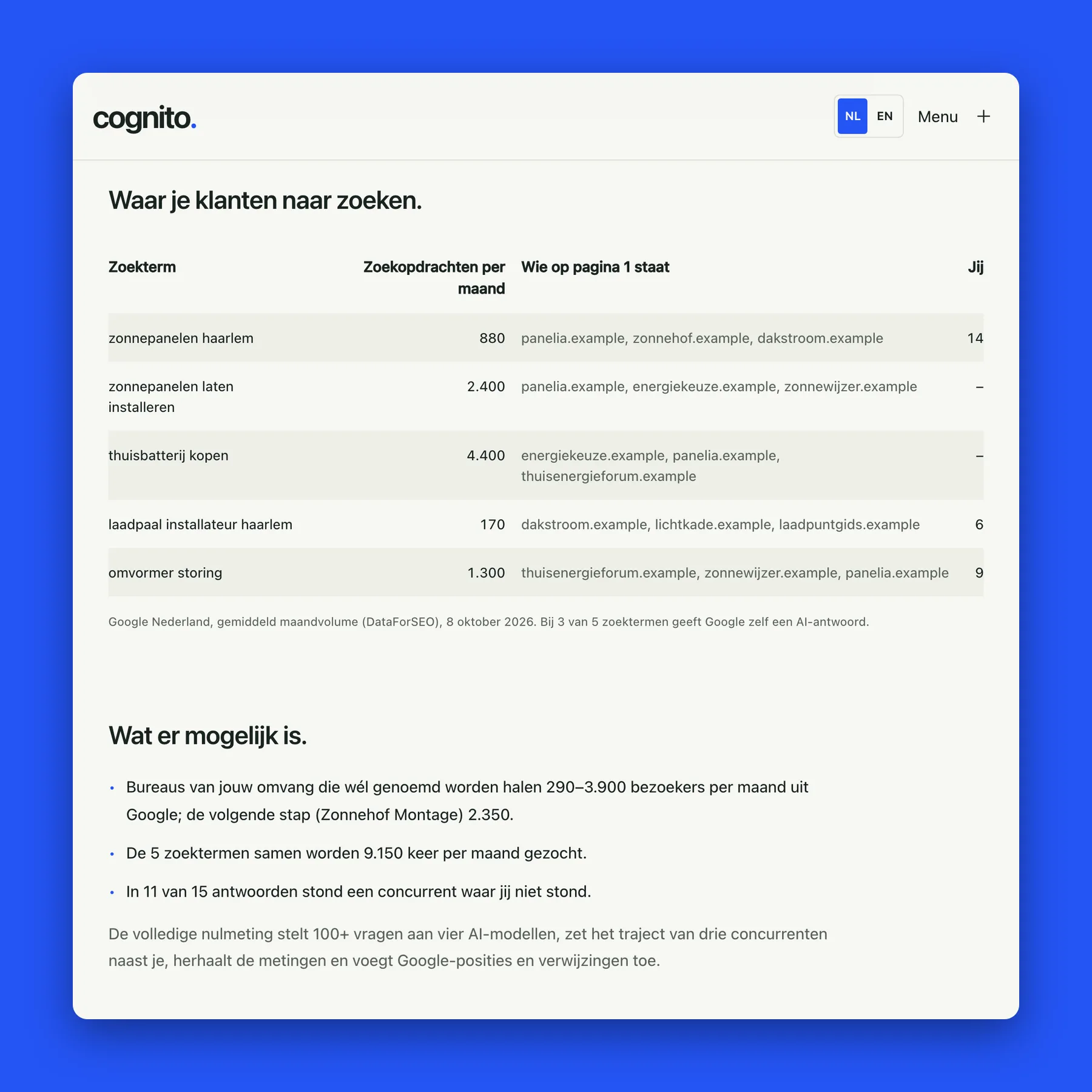
The terms customers type into Google, how often, who is on page one, and where the business stands.
Every request and scan in one list, searchable by company, website or e-mail.
The contact, the plan and the scan of one request, one click from the full report.
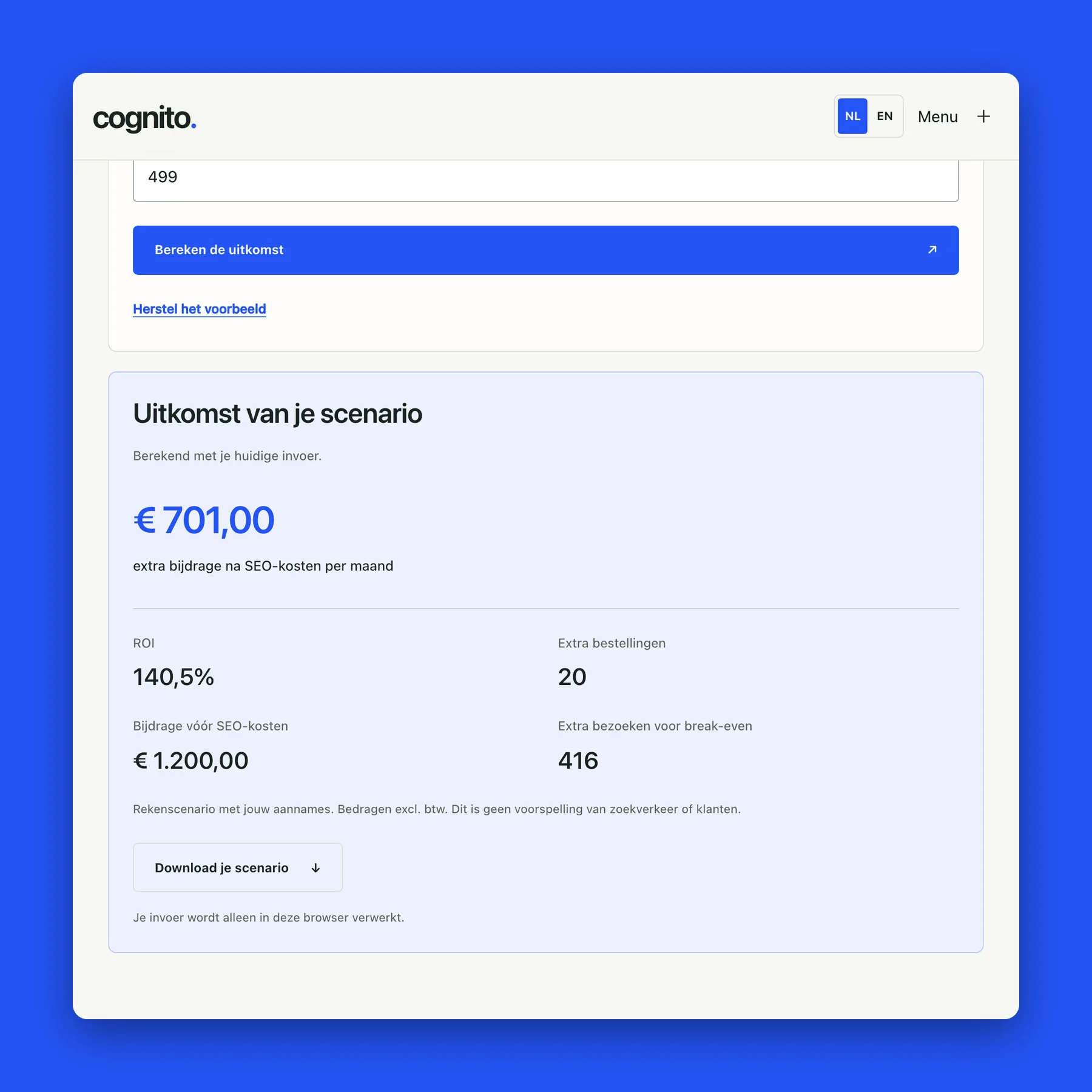
What extra visitors are worth after the cost of SEO, and how many it takes to break even.
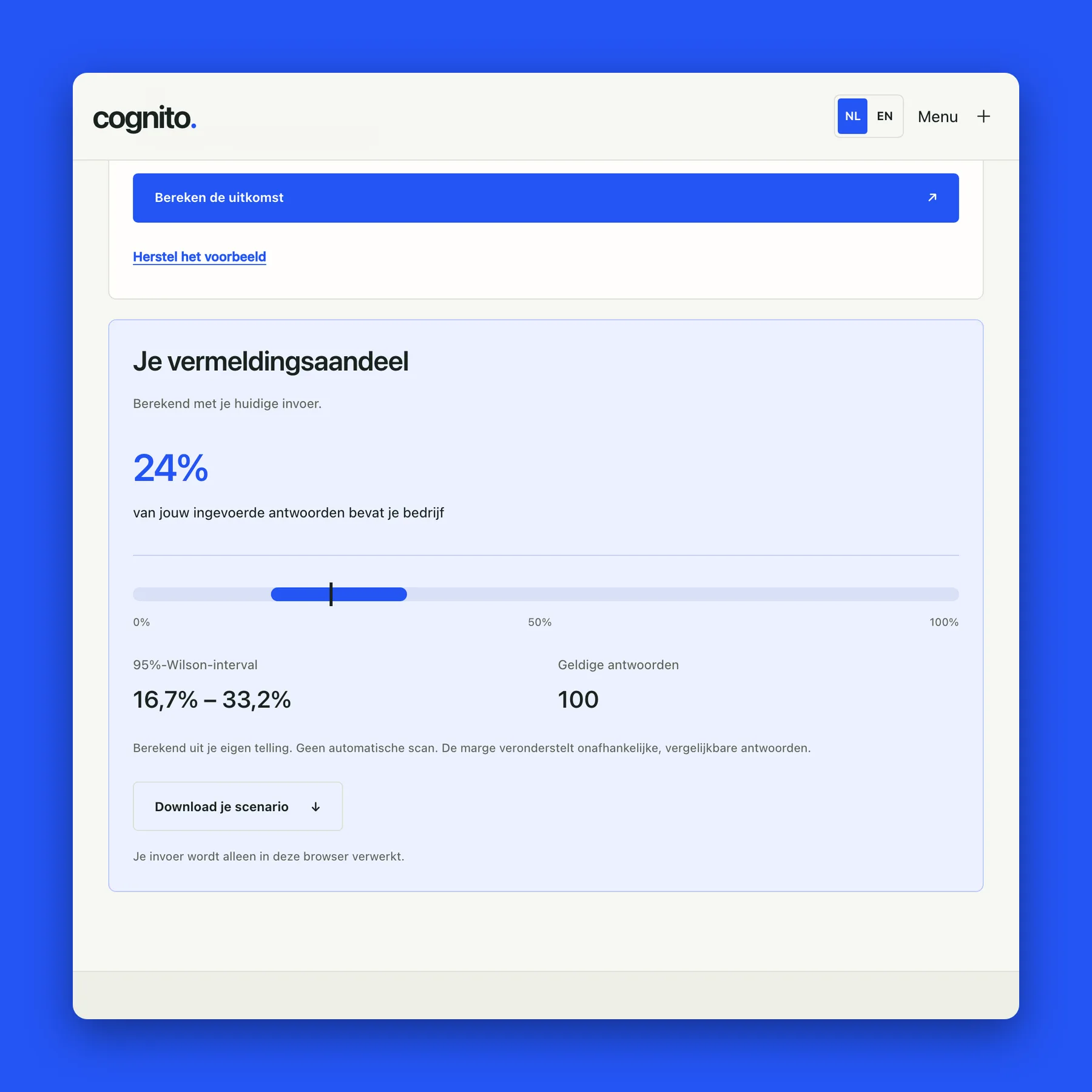
A business’s share of AI answers from its own count, with a 95% confidence range.
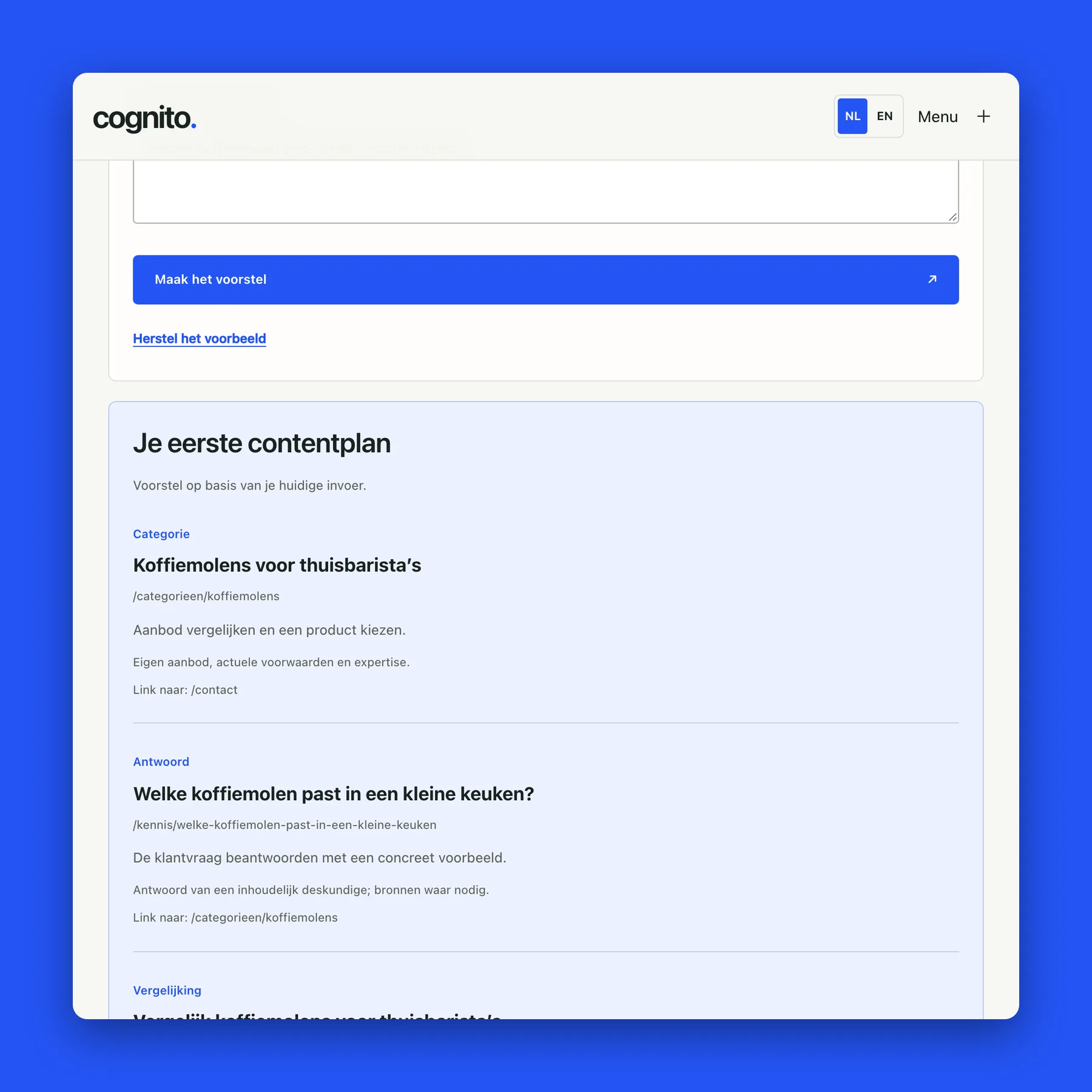
A first content plan from a product or service, an audience and one customer question.
Growing with the business
The work started on 13 September 2026. In two days the website stood in Dutch and English, with a content structure drawn from a map of 3,809 pages on eight comparable sites: eleven articles, three tools and three worksheets. On 16 September cognitosearch.com went live with 68 pages.
October brought the product. On 5 October the scan went live in a day of eleven pull requests: Claude as the third engine, competitors and cited sources, and the ladder from the same size to the market leader. The next day added the printable report and the confirmation mail.
Since then the work has been about running it well: releases only through GitHub, the inbox cut back to what the team uses, and since 12 October a scan in the language the customers search in. Twenty-three pull requests in the first twelve days of October.

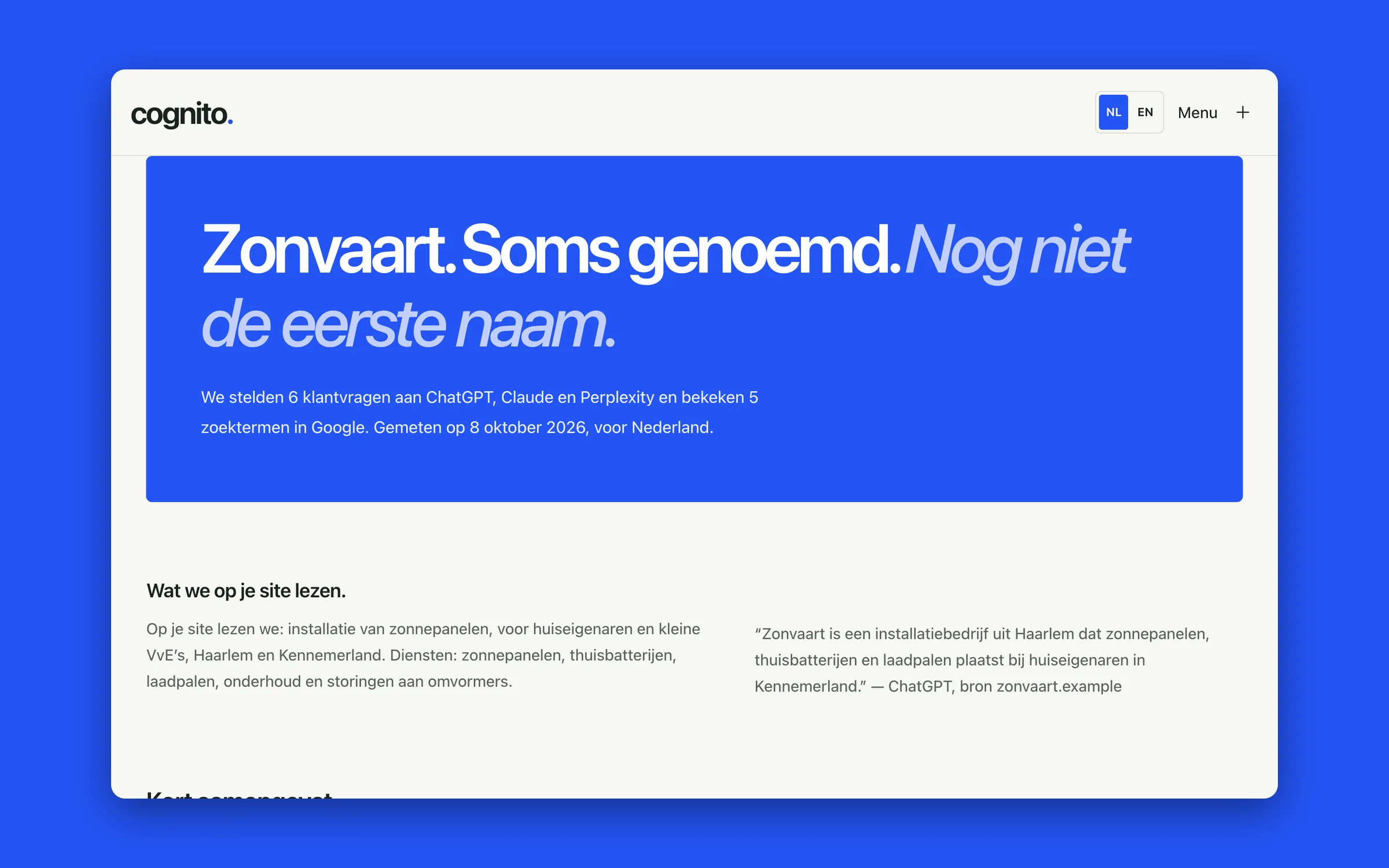
The growth structure
Growth runs on two engines, and both are measured.
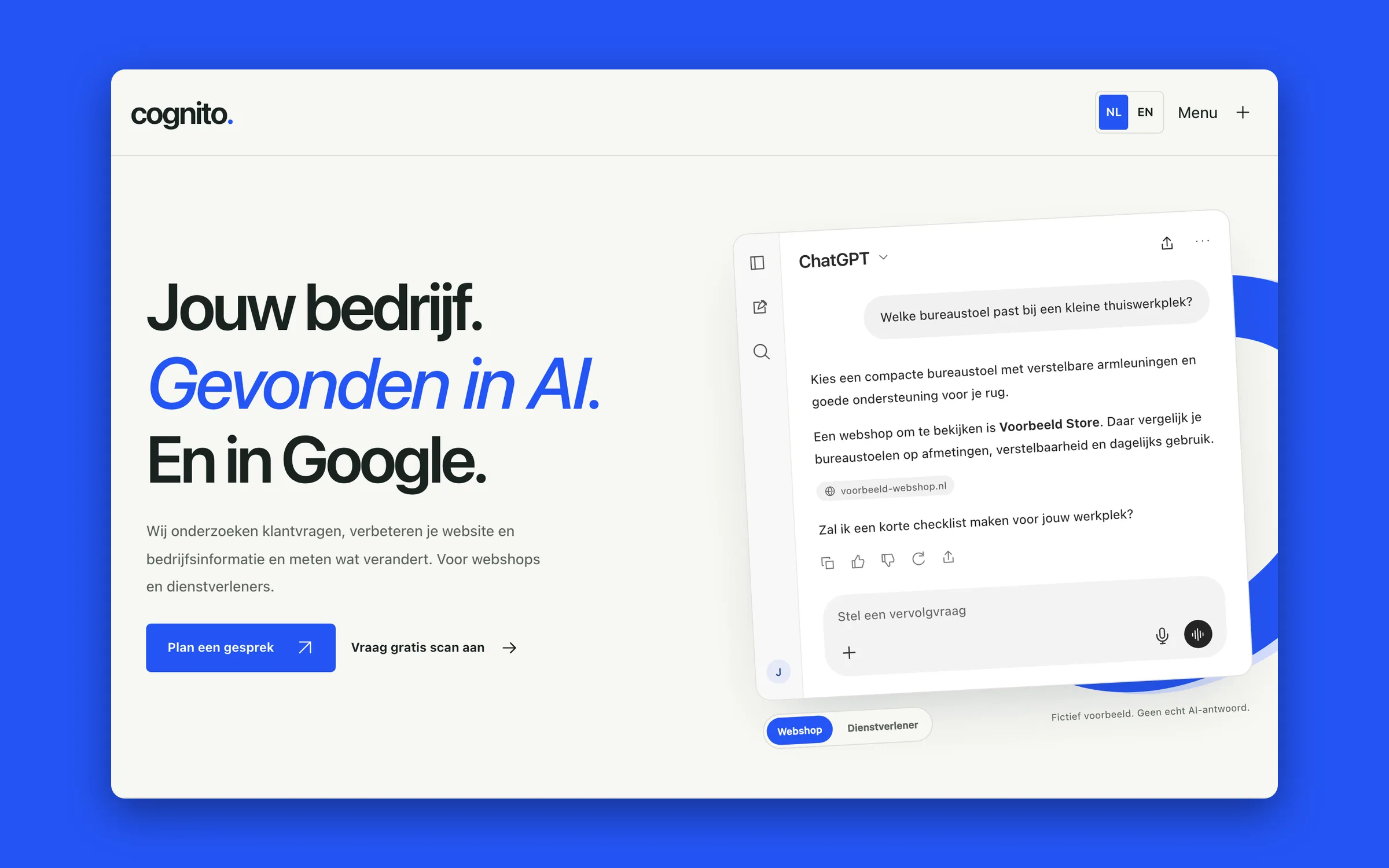
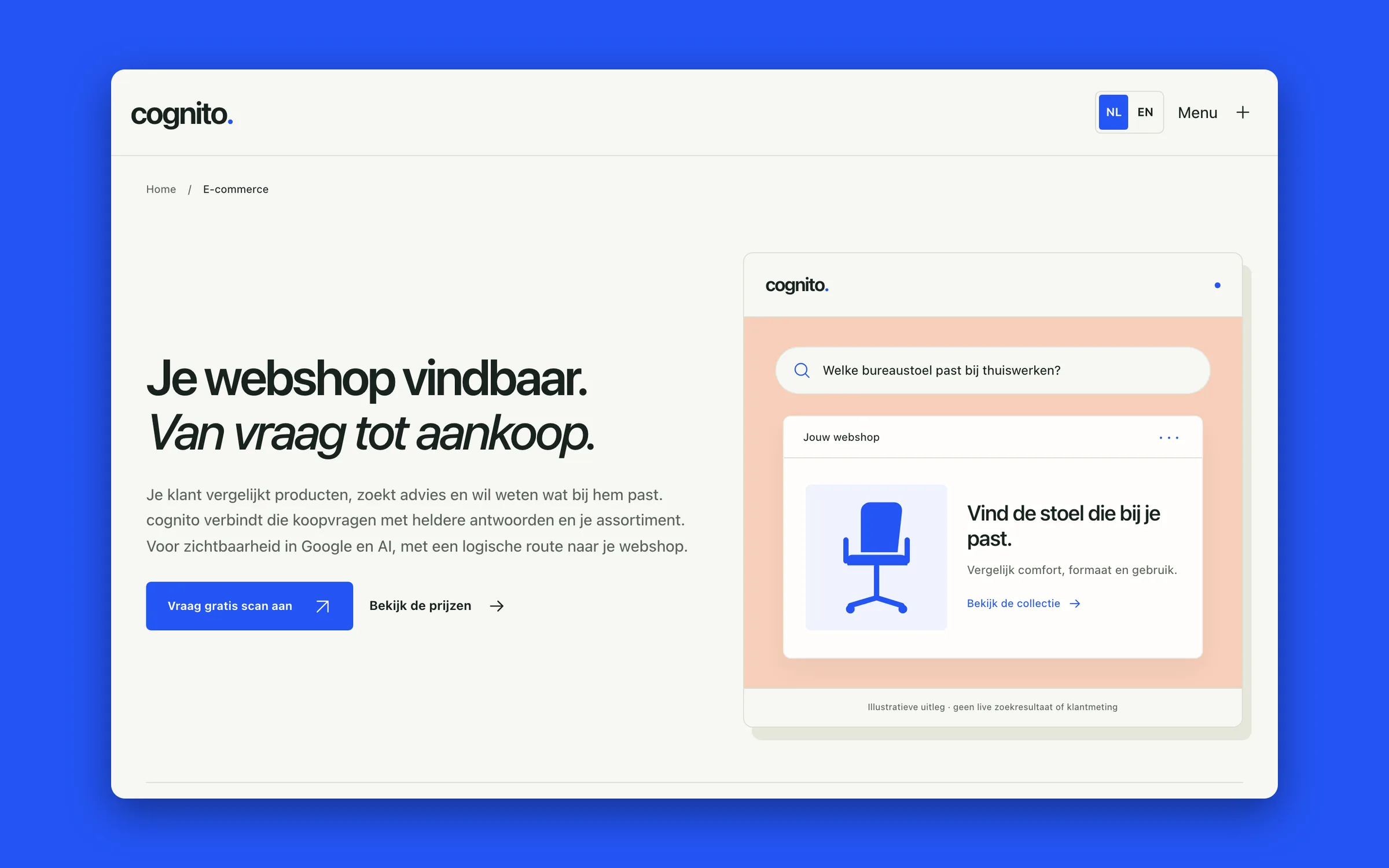
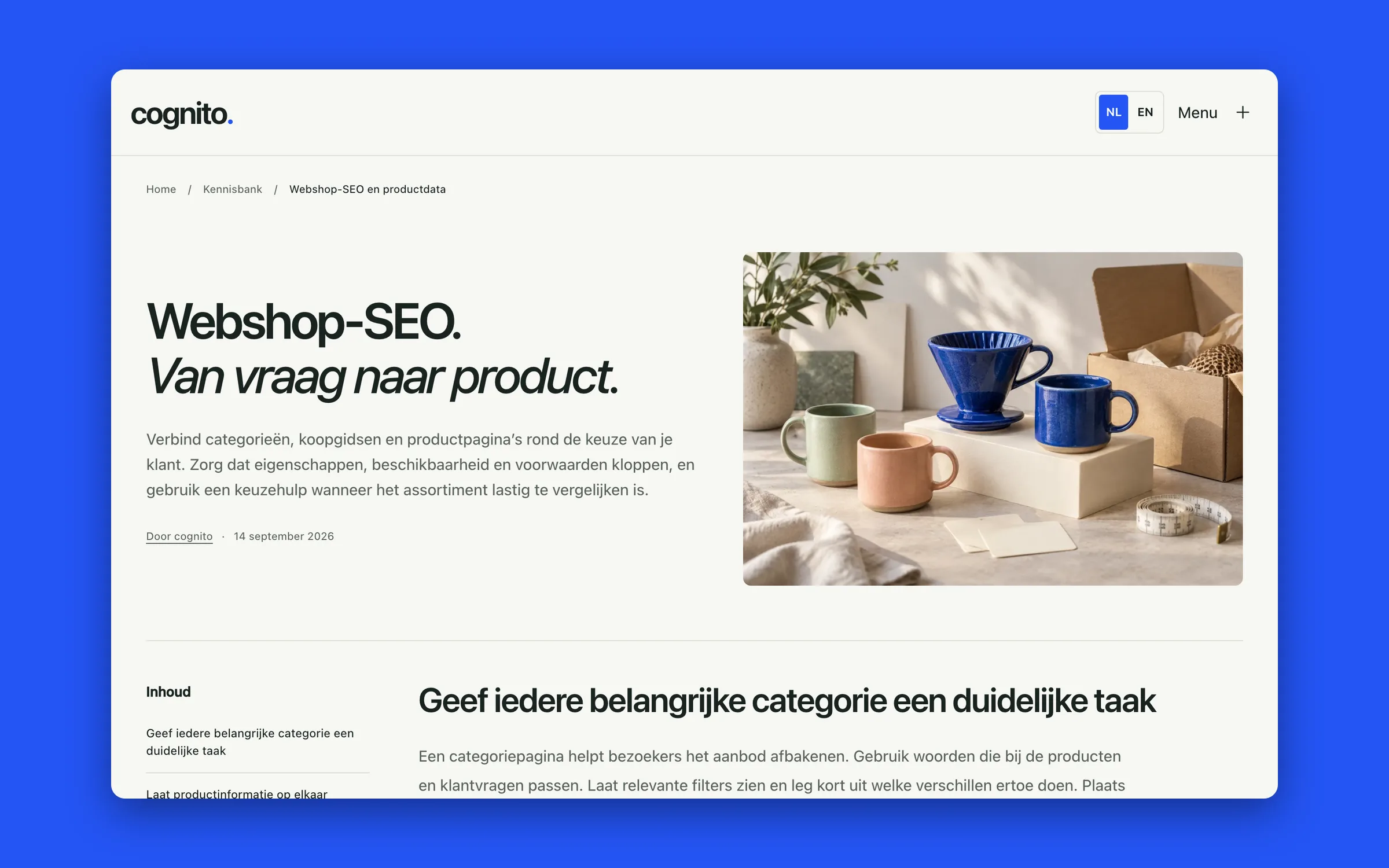
Search. 68 pages in two languages, each with structured data and one clear job: service pages, landing pages for webshops and service businesses, articles that answer what customers ask, and free tools that earn the visit.
AI search. The scan is the front door. It shows a business, in its own market, what AI says about it, and turns that into a request in the inbox with the scan attached.

Where it stands
A month after the first commit, Cognito has a website in two languages, a scan that measures AI visibility in two minutes, and an inbox where every request arrives with its scan. Booking on the page and cookieless analytics are built and wait to be switched on.