
Work
Wetaxus
- Client
- Wetaxus B.V.
- Services
- PlatformDataGrowth marketingAI tooling
- Since
- March 2025
- Website
- wetaxus.nl
Wetaxus is an accounting and tax firm in Amsterdam for business owners. Since March 2025 MOVE has built the machine behind its growth: one data core, fifteen systems wired to it, the internal tools the team works in every day, and the ads, search and social that bring clients in.
The challenge
When we started, Wetaxus ran on a spreadsheet funnel and a handful of loose tools. Leads came in through Meta ads, the website, Cal.com and the phone, and every system kept its own version of the truth. Nobody could say which ad had produced which client, or what a lead was allowed to cost.
The result
Since the start in March 2025 Wetaxus' revenue has grown 3.5 times, and every step of it is measurable: from the ad someone clicked to the client who signed.
×3.5
revenue since the start
31
automations live
15
systems live
612
pull requests merged
Behind the scenes
Back-end,
automated
- One core for every lead, deal and client.
- New leads in every system within two minutes.
- Calls, e-mail and meetings logged by themselves.
- Onboarding and follow-up, fully automated.
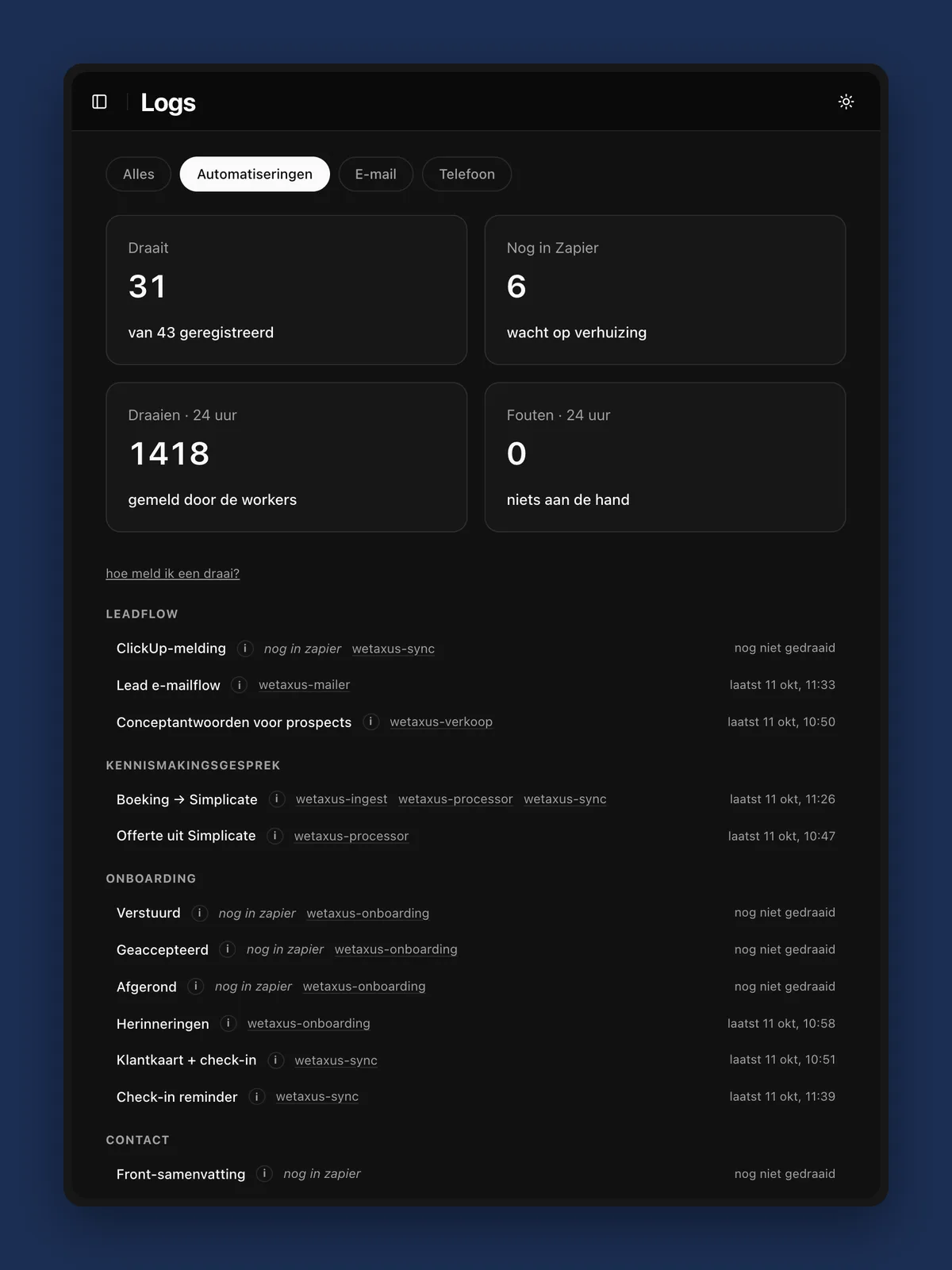
- AI for reports, sales replies and quotes, with 31 automations watched.

In front of the client
Front-end,
scaled
- A rebuilt website with 64 pages, 31 knowledge base articles and calculators.
- Four landing pages, one per audience, that book the meeting on the page itself.
- A weekly batch of video ads, judged against a monthly benchmark.
- Every lead traced from the ad to the signed client.
- Found in AI search as well as Google.
- A content engine in a system that scales, iterating on data around the clock.


One core
In August we brought everything together in one repository and one database: wetaxus-core, on Cloudflare D1. The old lead database moved in with its 39 tables and 1.1 million rows, and the old databases were switched off.
Since then one rule holds: no tool writes to another tool directly. Everything goes through the core.
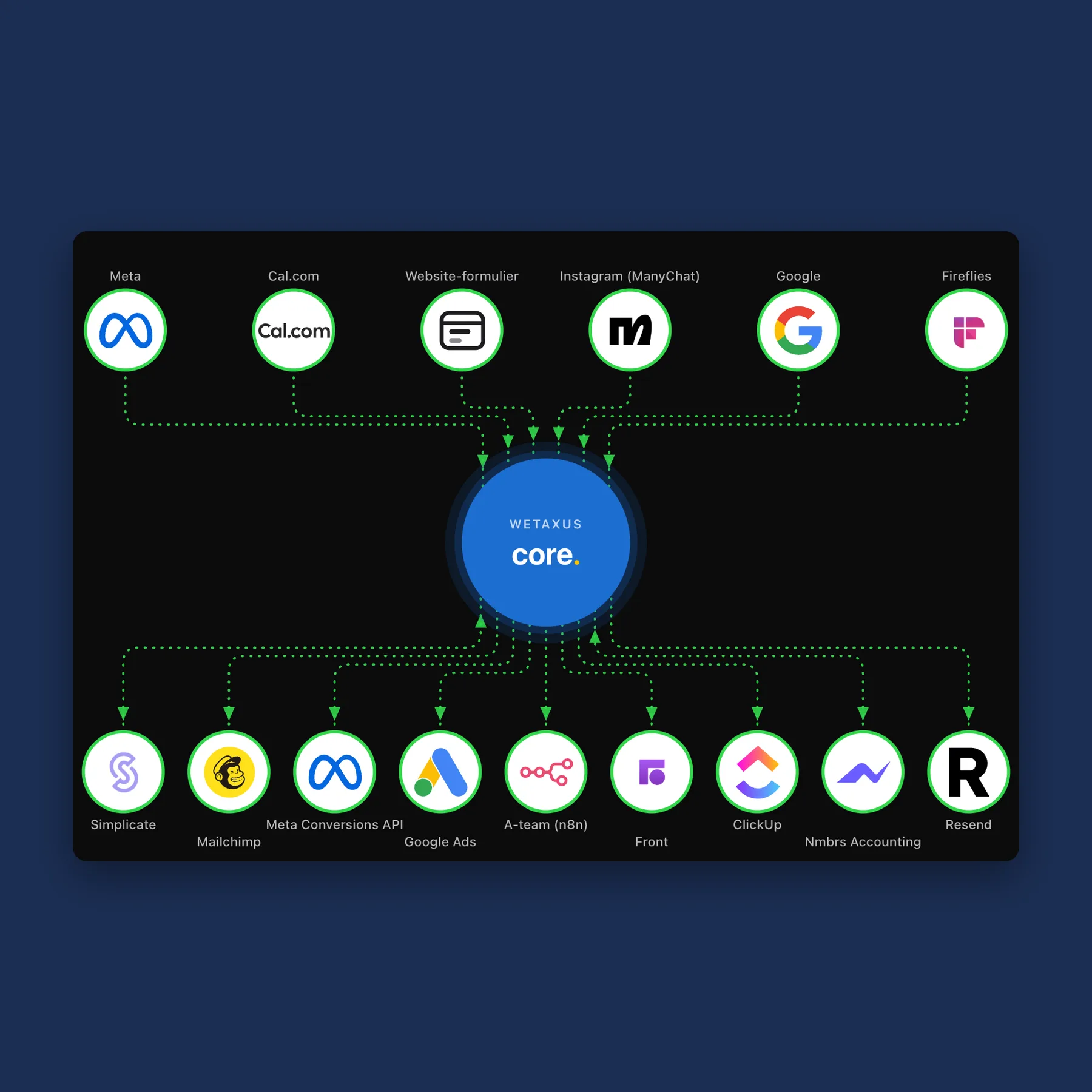
- Webhooks from Meta, Cal.com, the website and ManyChat land in an ingest worker that checks the signature, archives the message and puts it on a queue.
- A processor works out who the person is and writes the contact, the event and the source of every lead.
- Every two minutes a sync worker pushes the changes out to Simplicate, Mailchimp, Front, ClickUp, Meta and Google, and records each delivery so nothing is sent twice.
- Every fifteen minutes the dashboard pulls the other way: Simplicate, Rinkel, Front, Fireflies, Nmbrs, Meta and Google mirror into the core.
Today the core holds more than 75 tables and about 260,000 rows, and grows by some 50,000 rows a month.
Integrations
Fifteen systems are wired to the core, each with one job and one direction.
- In: Meta Lead Ads, Cal.com bookings, the website forms, Instagram messages through ManyChat, Fireflies meetings, and Google Ads, Analytics and Search Console.
- Both ways: Simplicate, the CRM, and Nmbrs Accounting.
- Out: the Meta Conversions API, Google Ads conversions, Mailchimp, Front, ClickUp, Resend for e-mail, and the lead flow of a partner agency.
Since October Google Ads gets the same feedback as Meta: a booked meeting at €75 and a new client at a year of its fee, sent from the core.
Calls from Rinkel, e-mail from Front and meeting notes from Fireflies all land on the client's timeline in Simplicate, so an advisor sees the whole conversation in one place.
Internal tooling
The team works in one internal app behind Cloudflare Access and with rights per person and per tool. An AI chat answers questions straight from the core, and clients get their own portal for intake, documents and their reports.
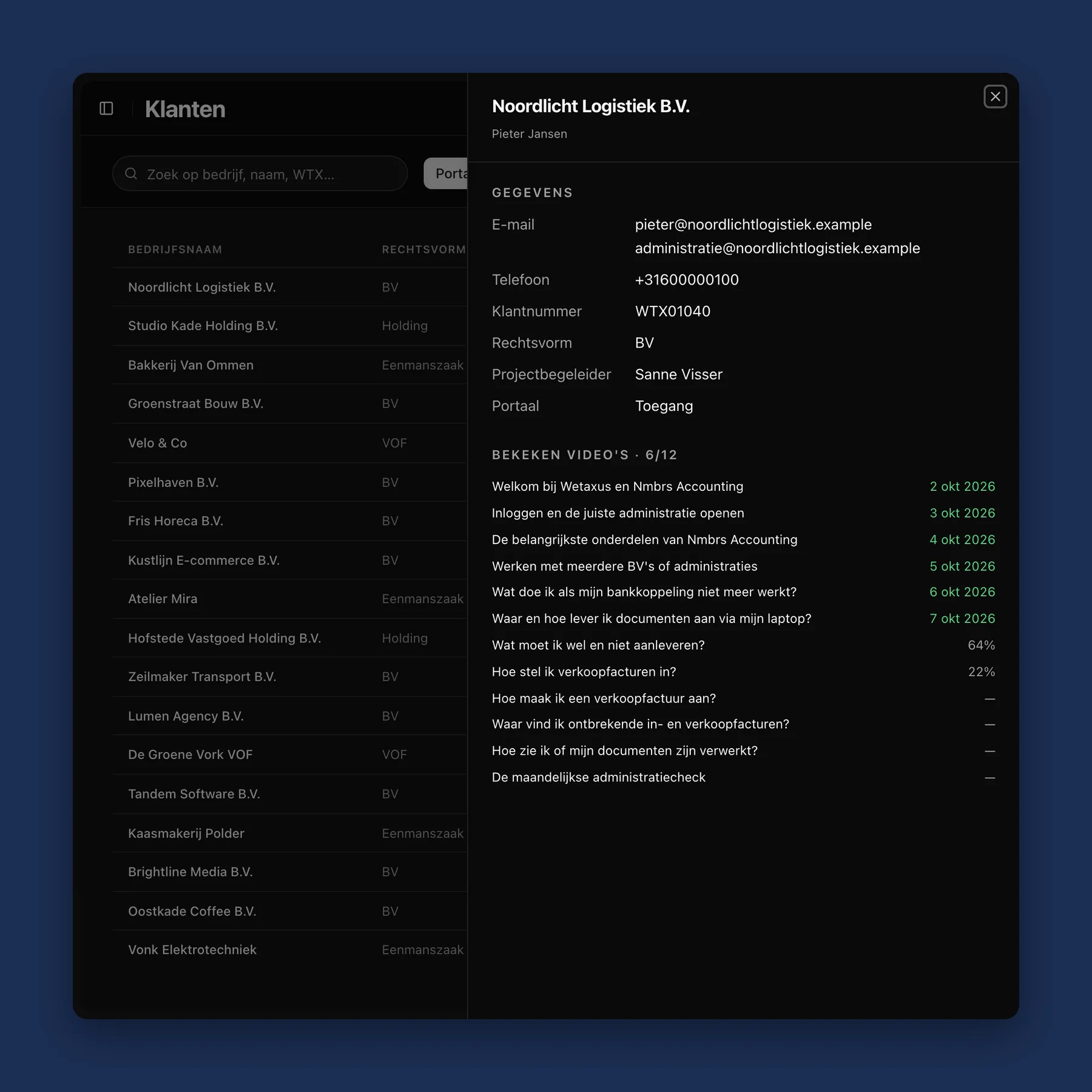
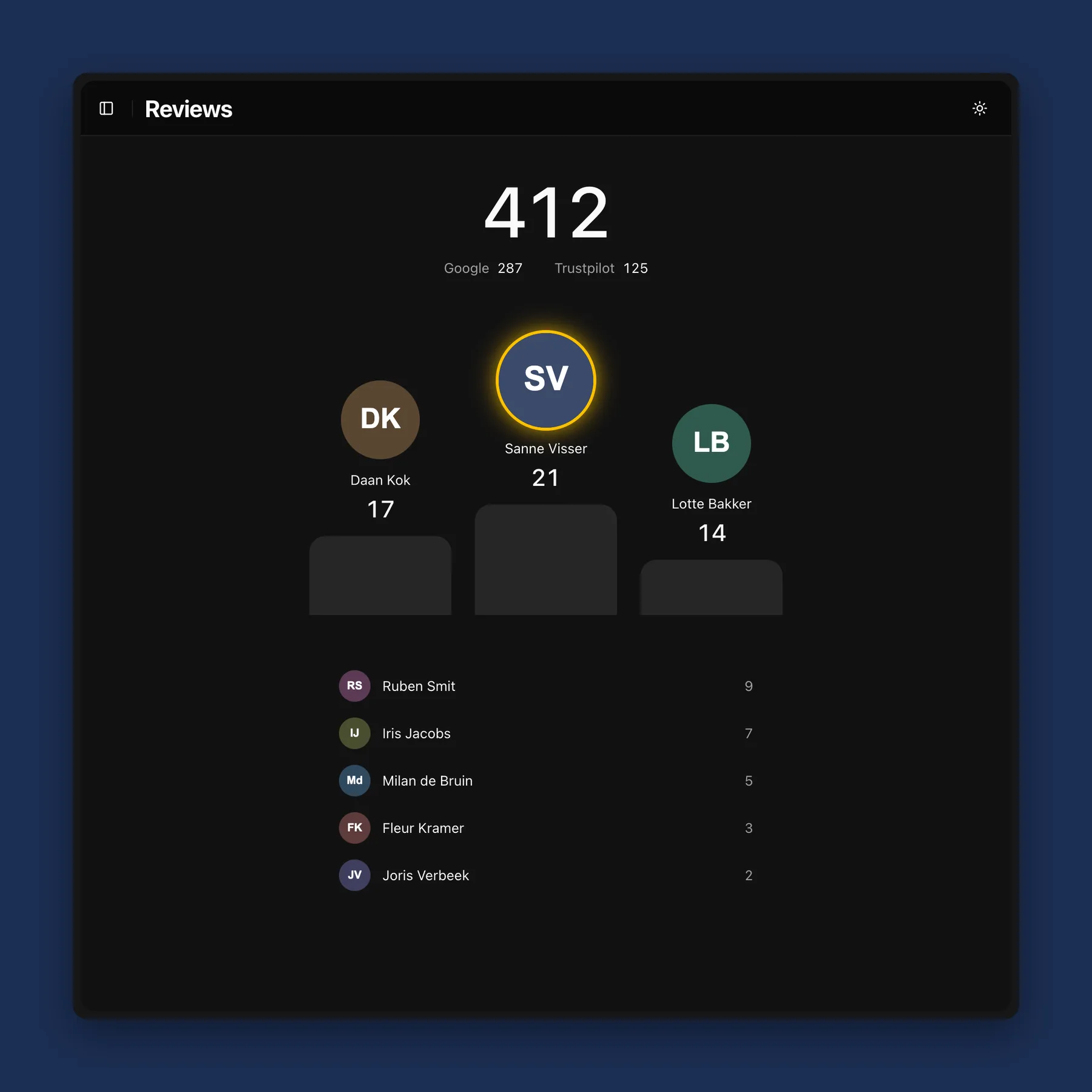
Since October it also holds every active client in one list, 214 of them, with their contact person, portal access and the videos they have watched. A Reviews screen counts the Google and Trustpilot reviews and the colleagues they name, and two Friday mails sum up the week in sales and reviews.
The toolkit
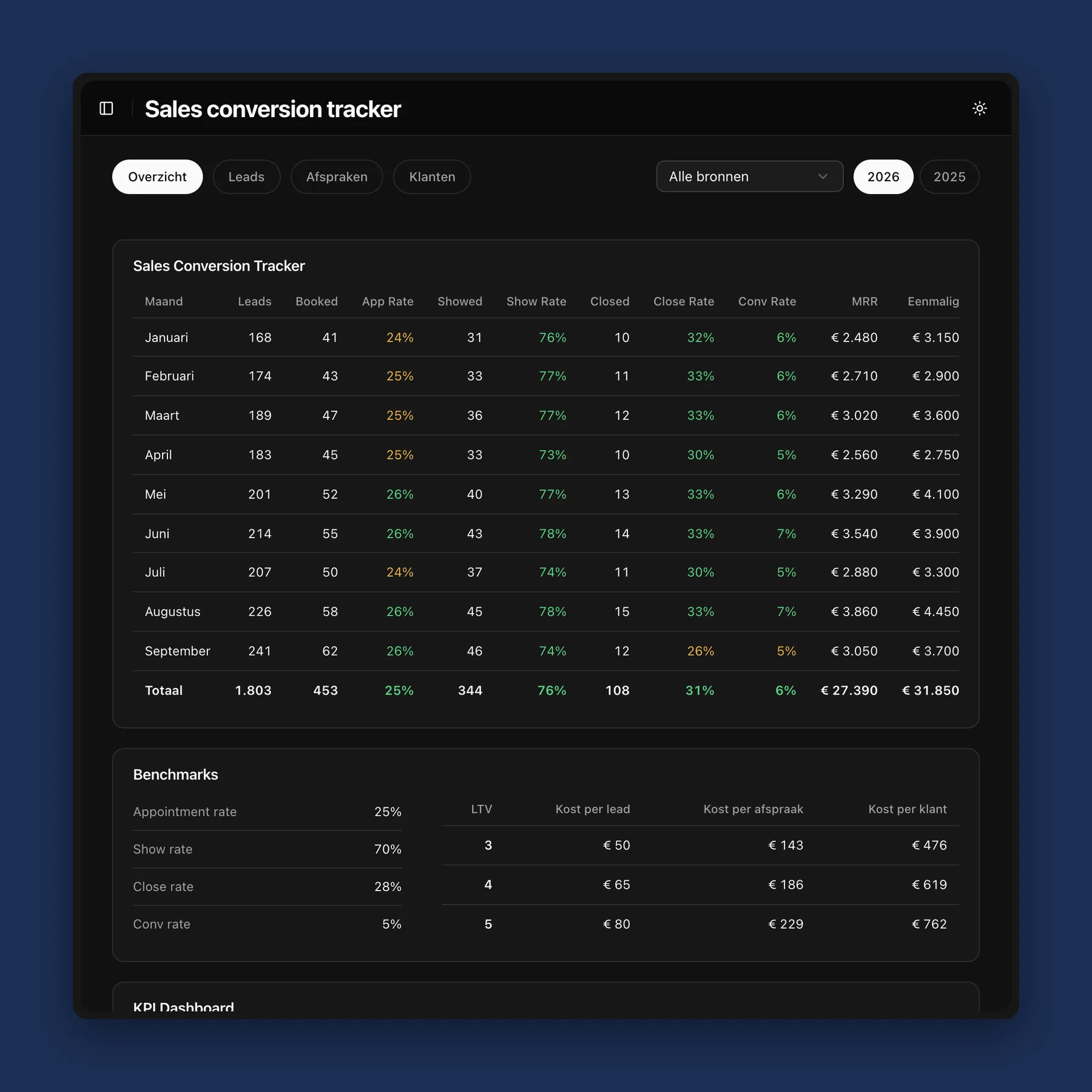
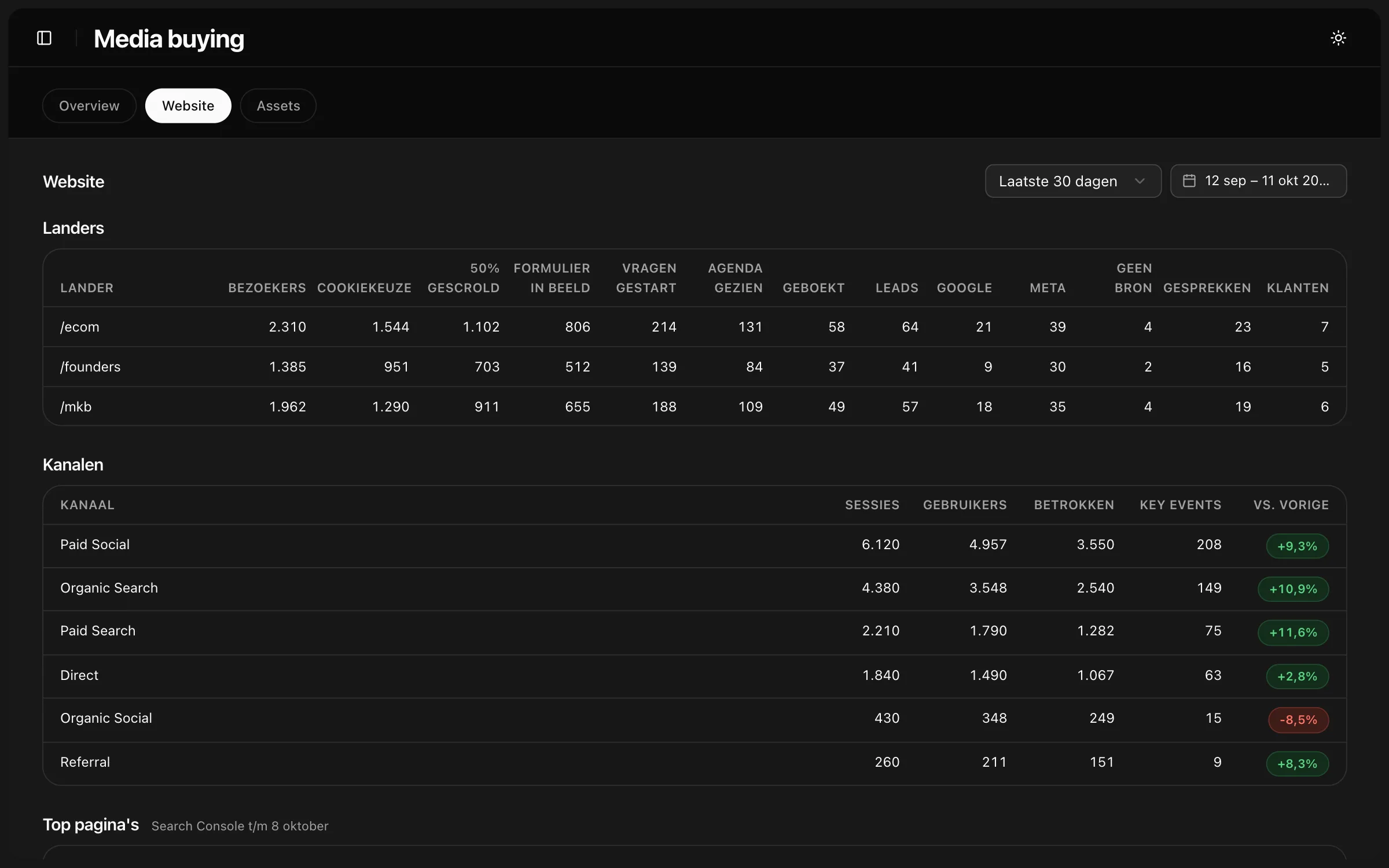
Leads, appointments and clients per month, with acquisition cost, monthly revenue and lifetime value.
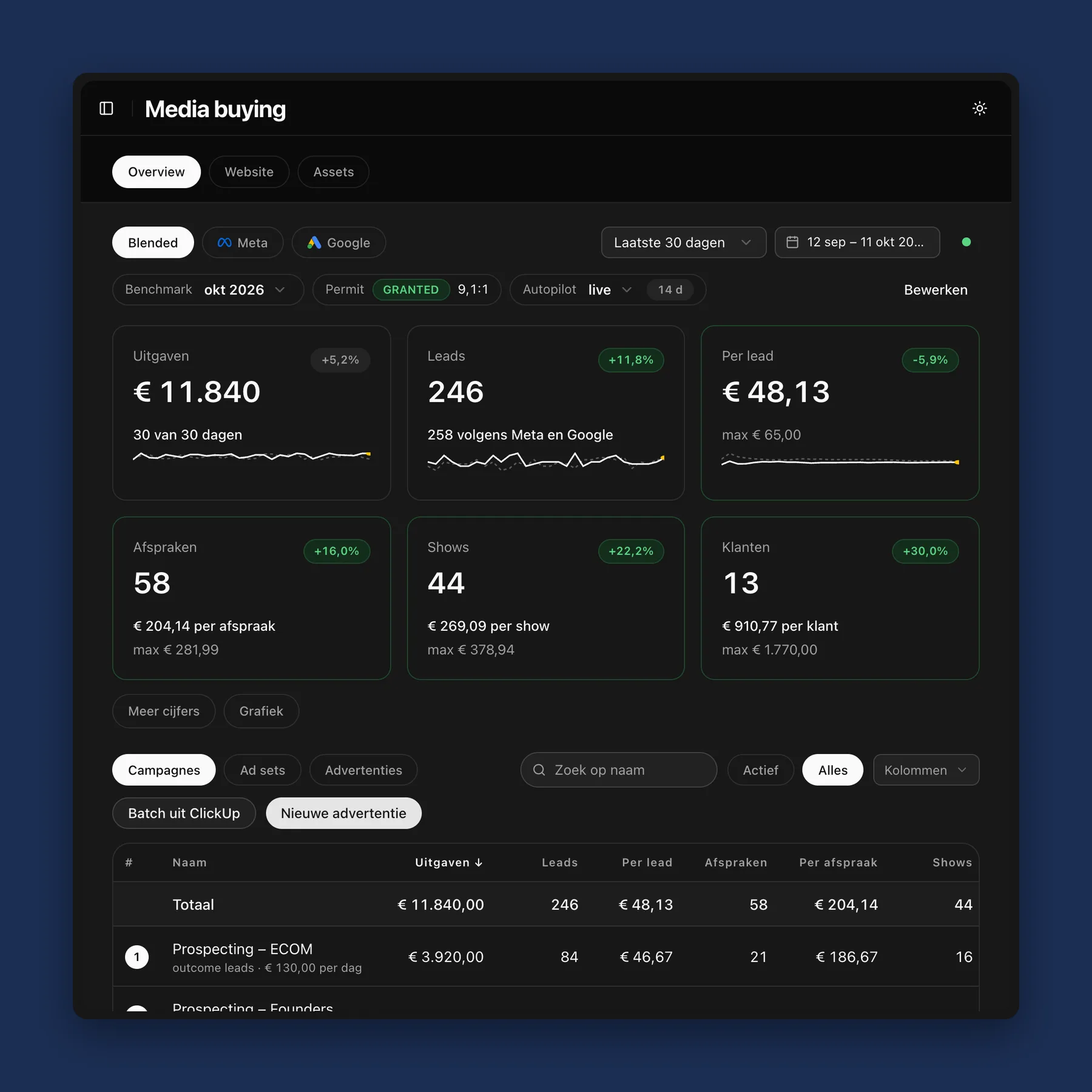
Every campaign, ad set and ad from Meta and Google, down to the clients and revenue it brought in.
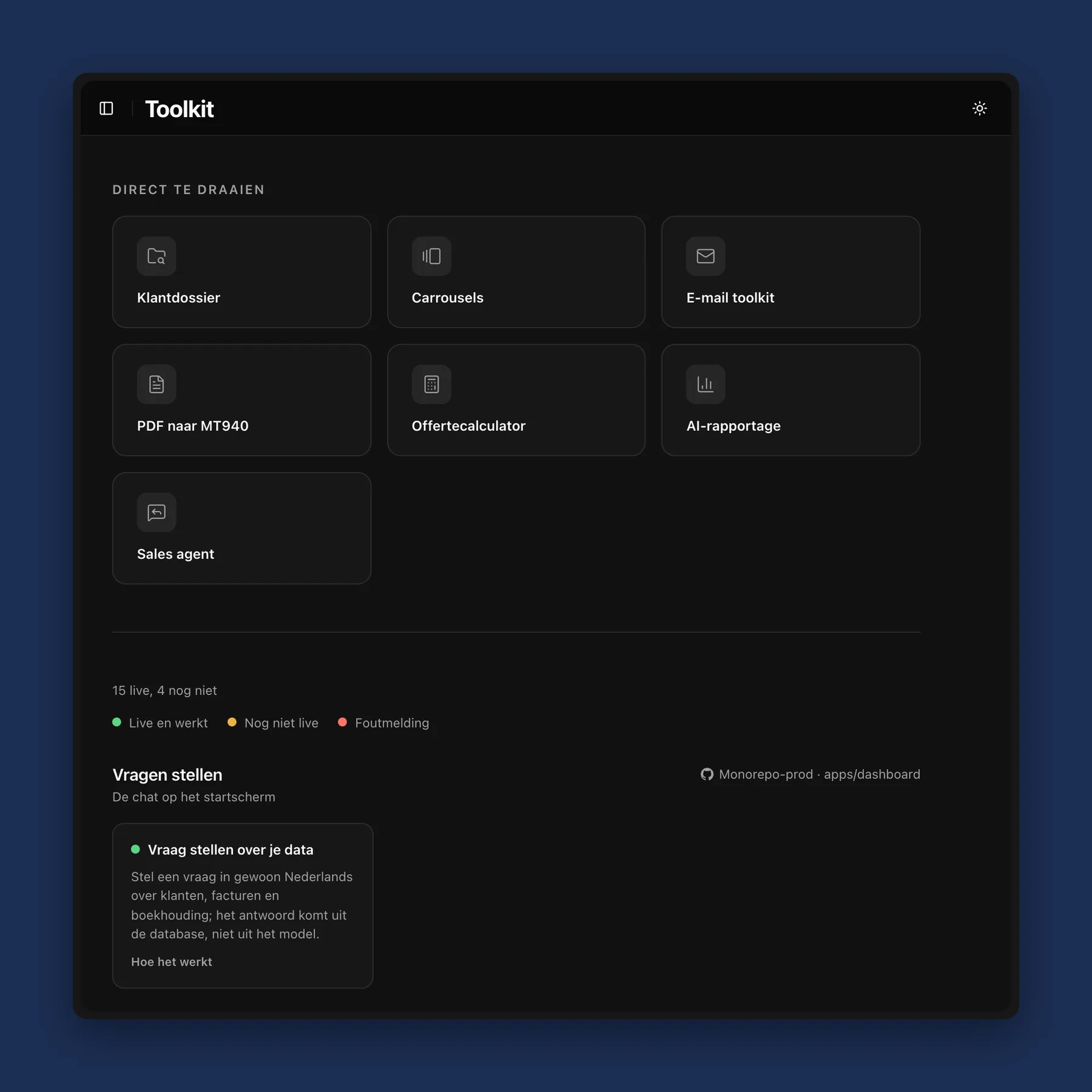
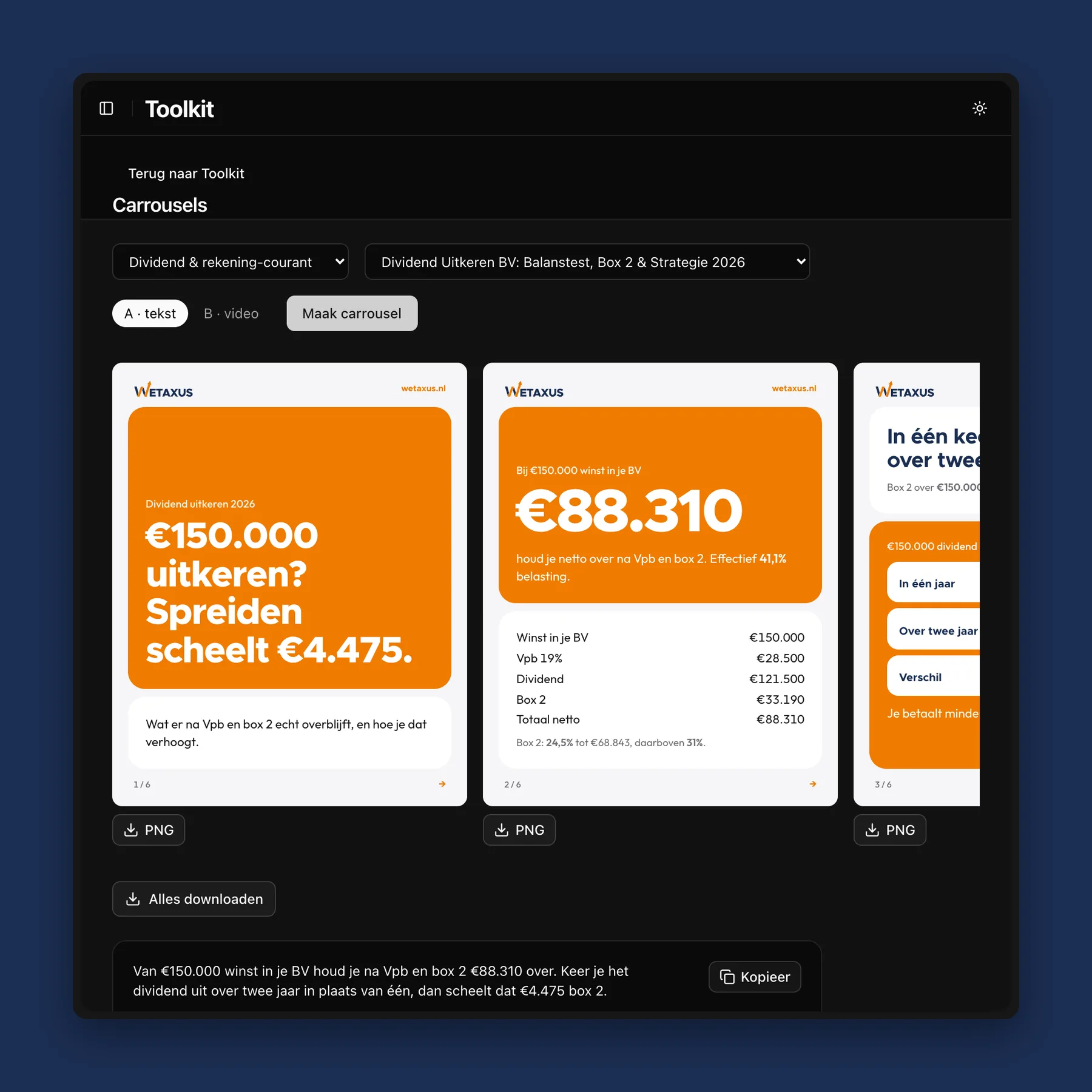
One page where the team runs its AI tools: an e-mail writer that delivers finished campaigns, client document search, carousels and bank statement conversion.
Every active client in one list, with contact details, portal access and the videos they watched, and portal access granted in one click.
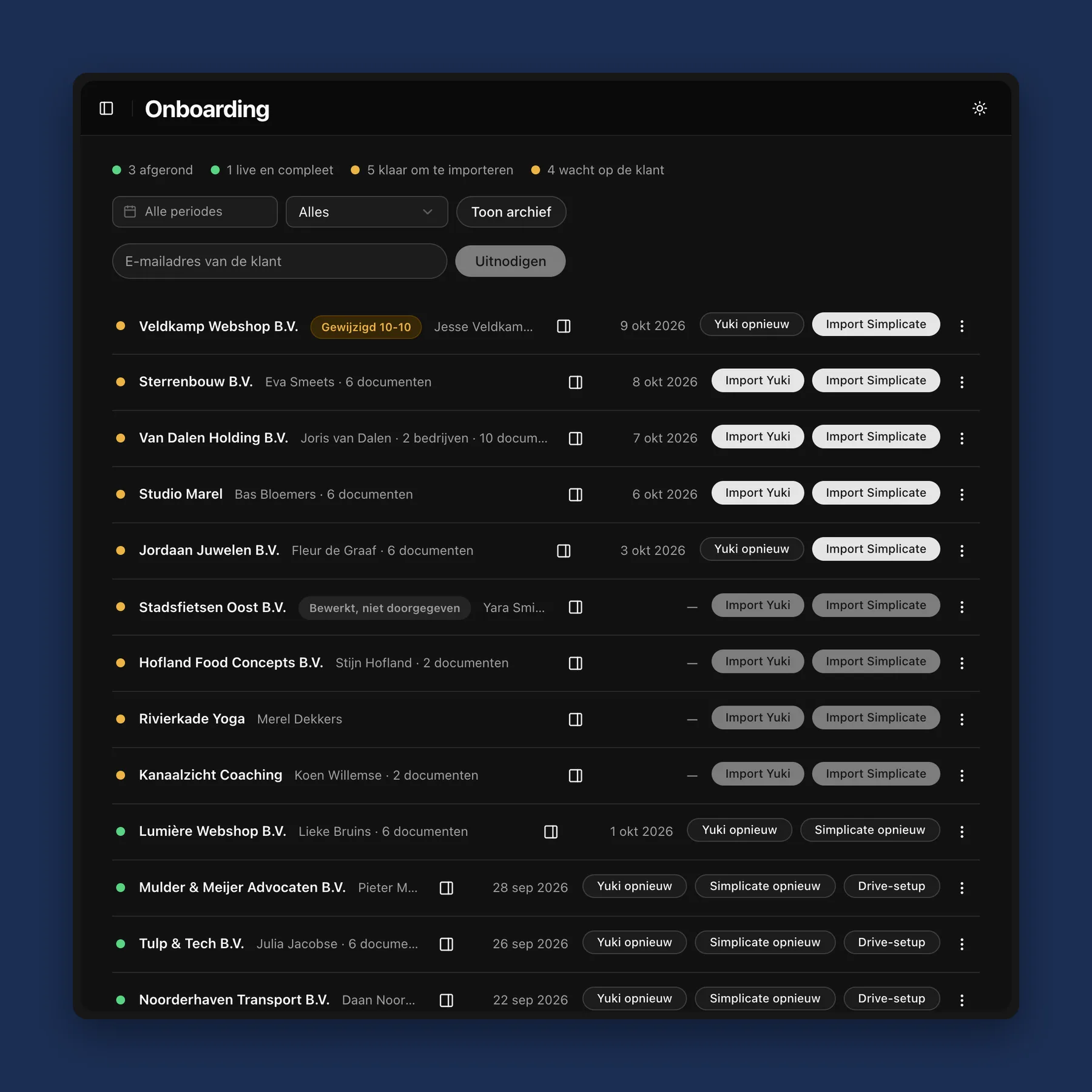
Client dossiers from intake to signed, imported into Nmbrs and Simplicate with one click.
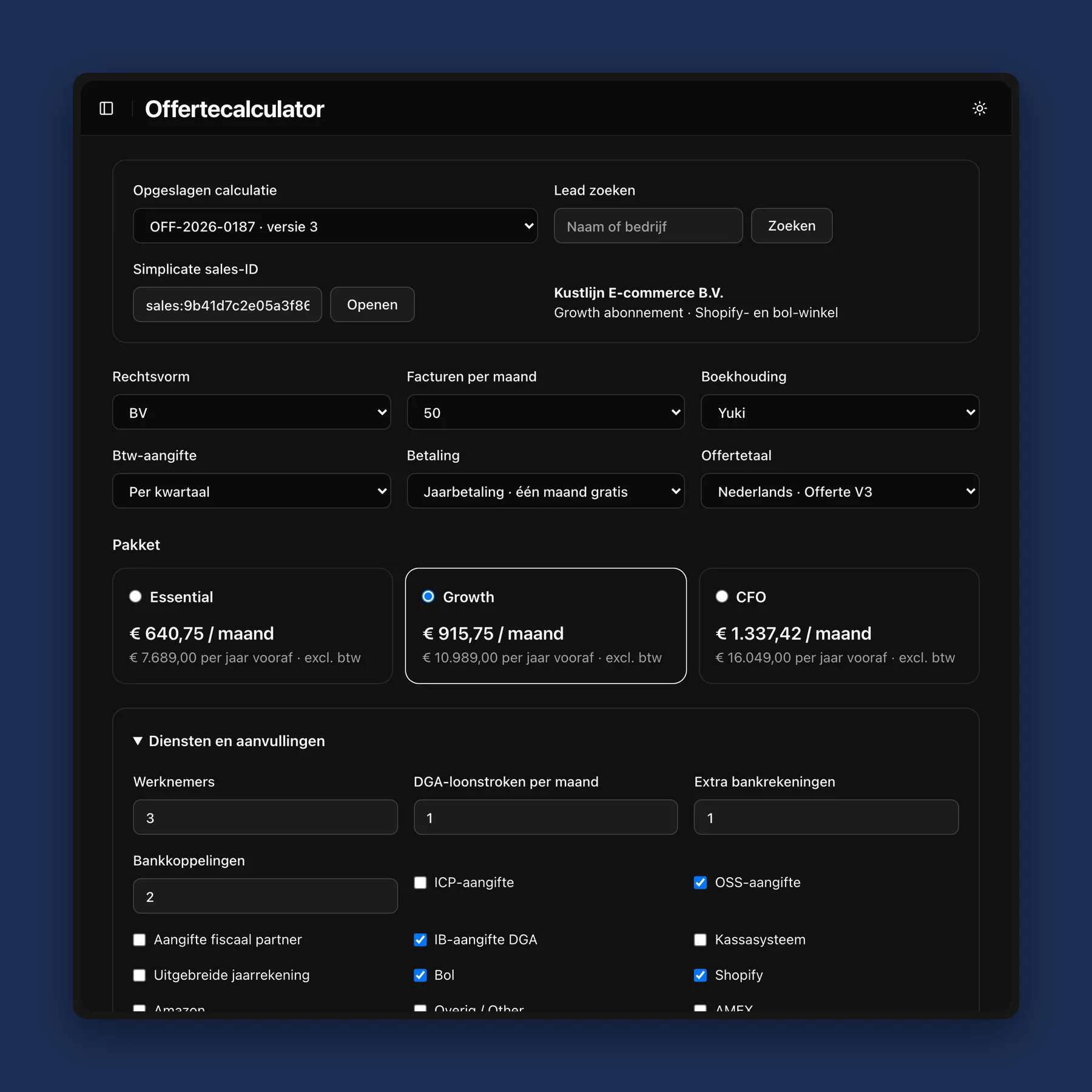
The price of an engagement from the same model as the website, saved with the sale.
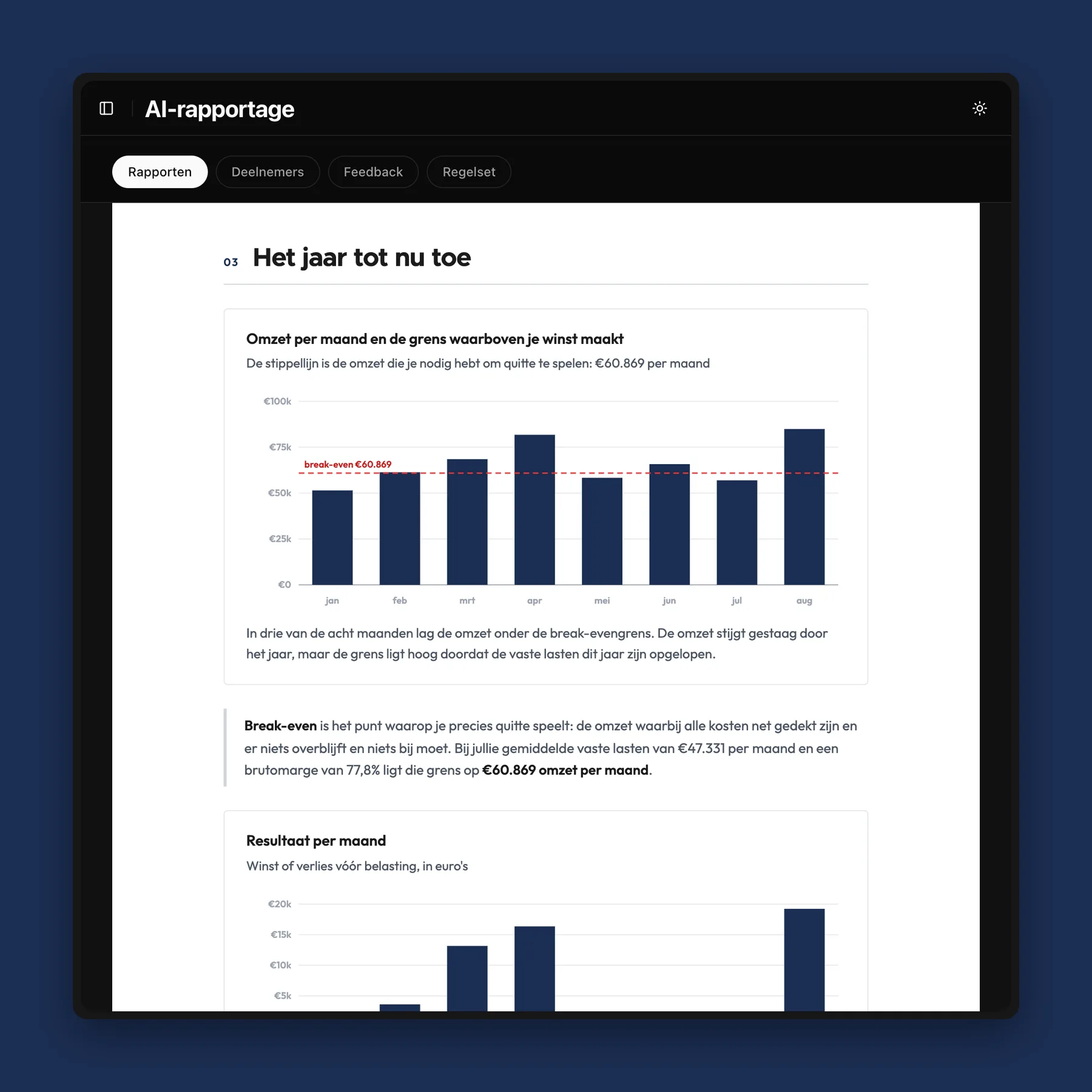
A monthly report for every client, written from the books and sent through the portal.
Google and Trustpilot reviews counted in one place, with a podium for the colleagues clients mention most.
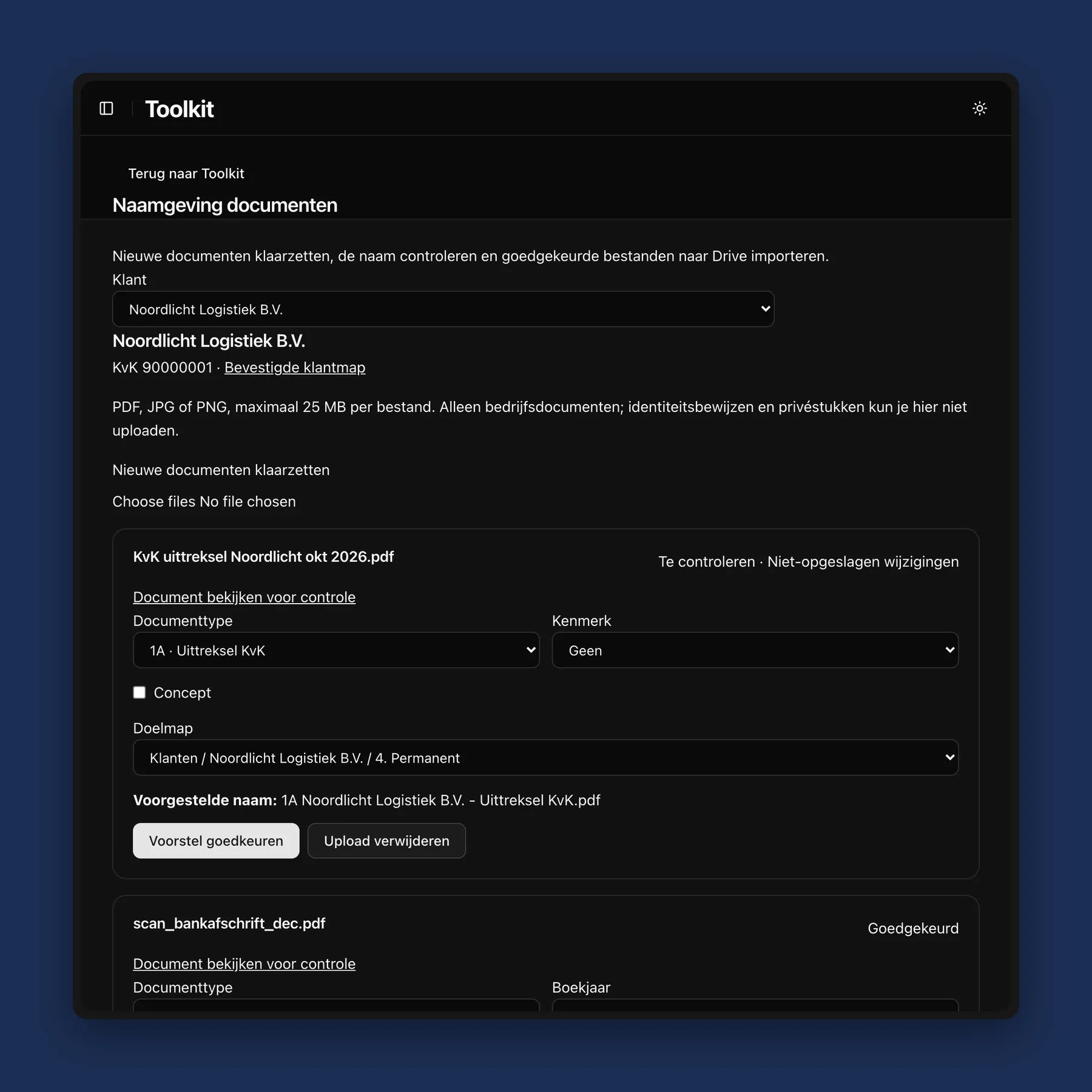
New company documents get a name in the house standard and the right Drive folder, approved and filed in one step.
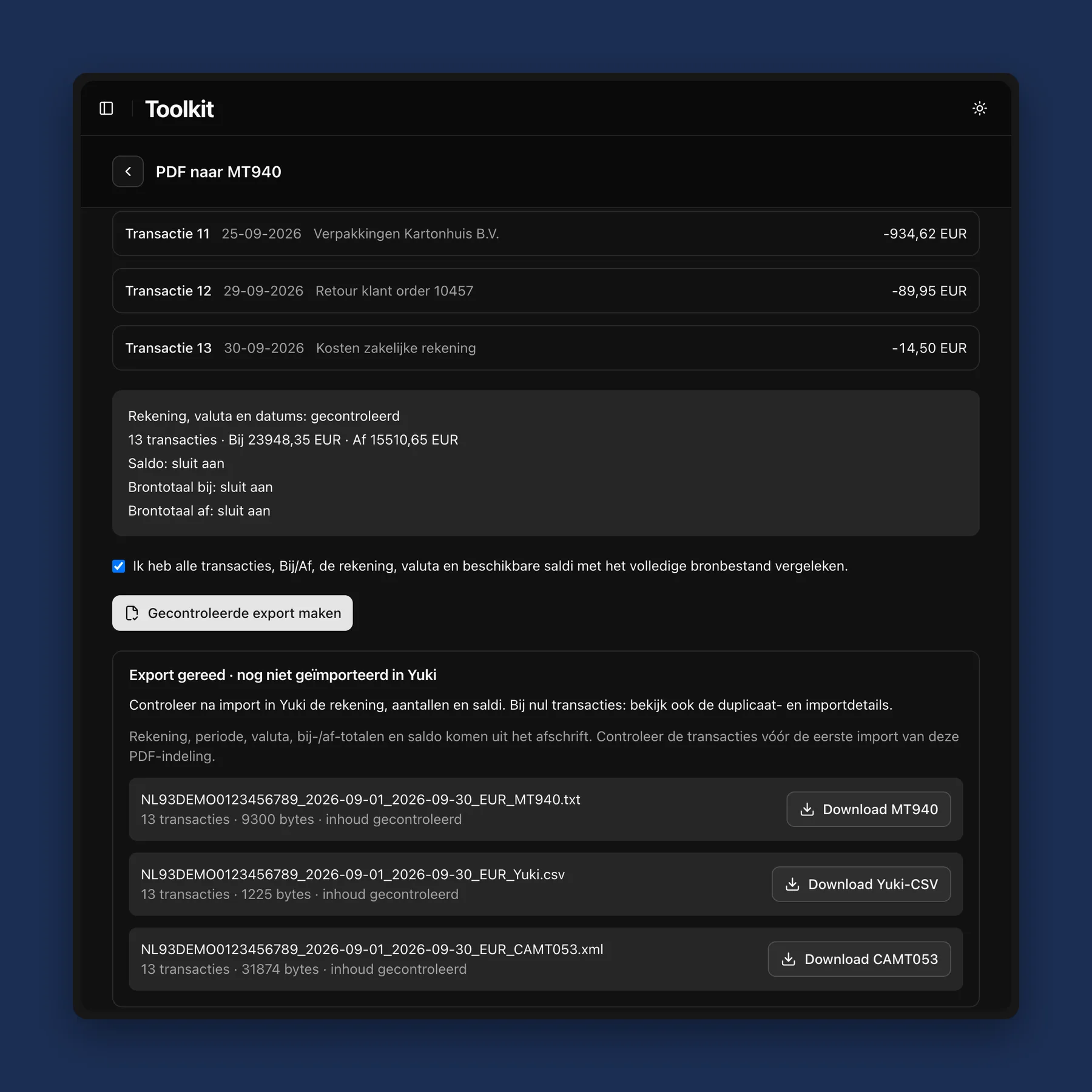
Bank and credit card statements read from PDF or CSV, checked against the original, and exported as MT940, Yuki CSV or CAMT.053.
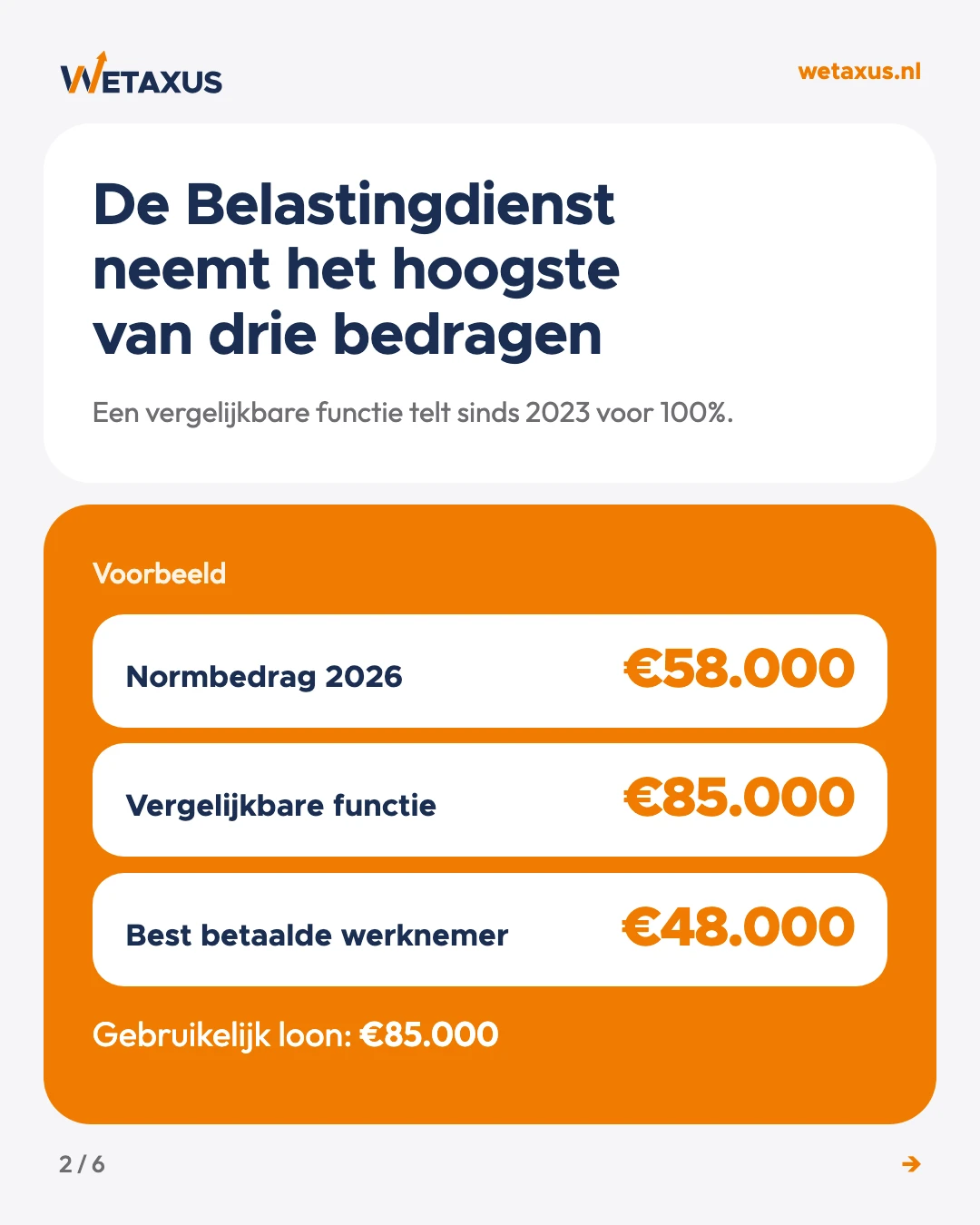
Instagram carousels from the knowledge base, rendered with office b-roll and planned in ClickUp.
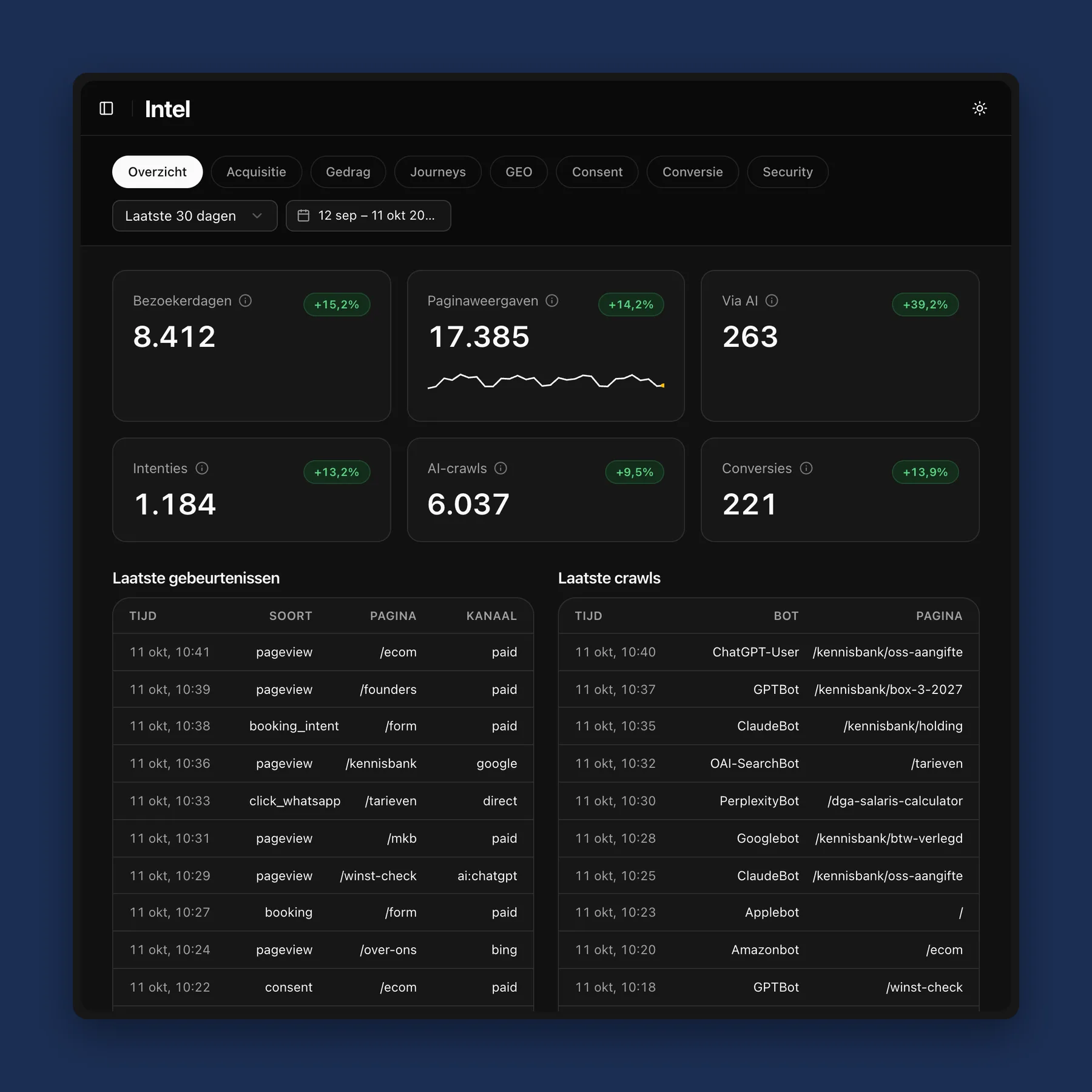
What happens on the website and in AI search: visits, journeys, crawlers and conversions.
The client portal
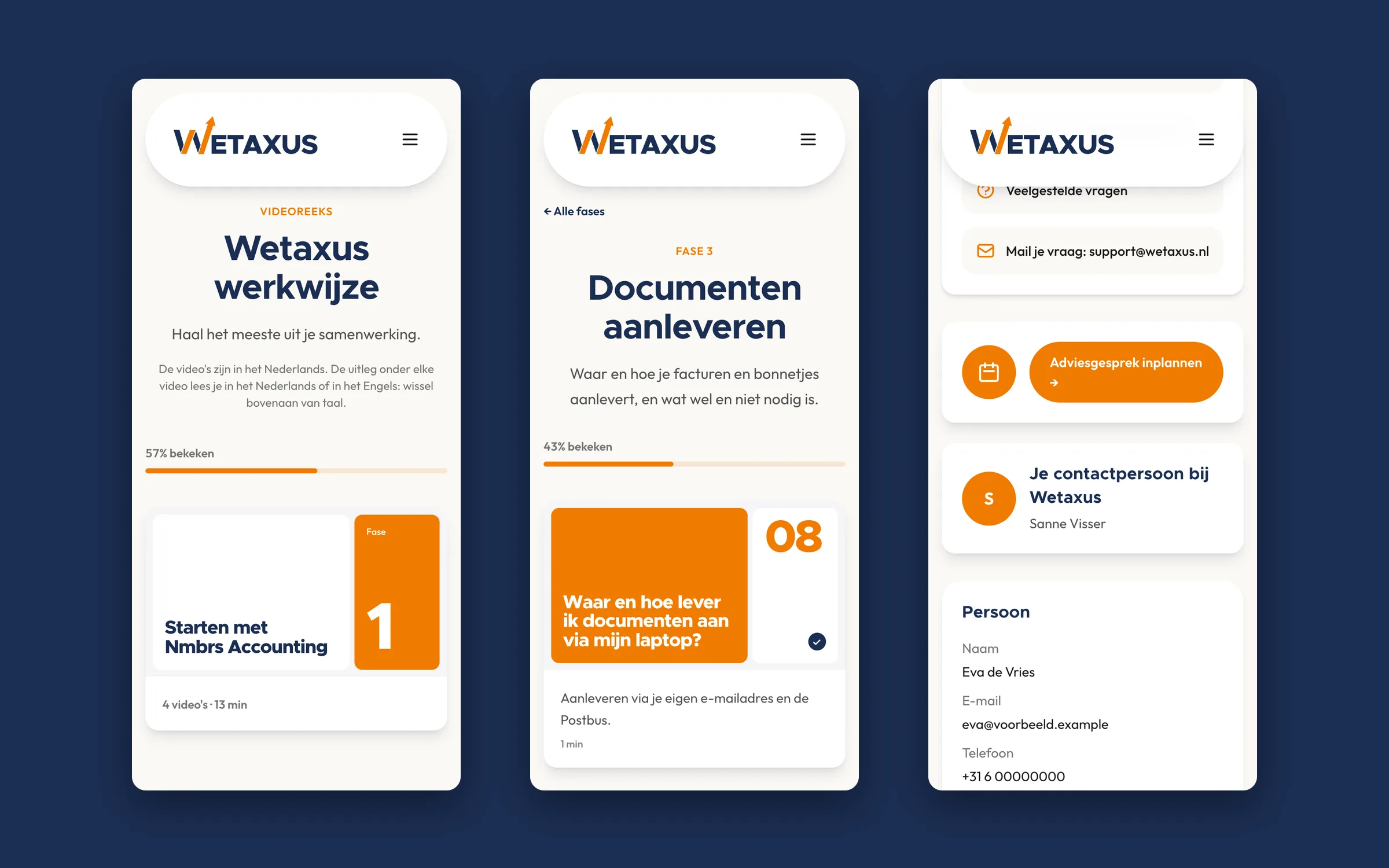
In October the portal opened to every client, not only new ones. The existing client base was brought into the core from the CRM, and each client got access without an invitation mail going out by mistake. A client can log in with any address they use and sees their own contact person at Wetaxus.
- Sixteen short how-to videos in six phases, from logging in to the monthly routine, each with a written guide in Dutch and English.
- A checkmark on every video watched and a progress bar per phase, which the team sees in the client list.
- The monthly AI report, delivered in the portal with one mail when it is ready.
- One address for every question, with an advice call one click away.
‘We stopped asking which tool knows the answer. There is one place, and everything else reads from it.’
Growing with the business
The work grew as Wetaxus grew. Revenue is 3.5 times what it was at the start in March 2025, and every step of it can be traced in the core.
In 2026 the pace went up. A dashboard for Meta ads in March. A funnel in Google Sheets and ClickUp alerts in May, and a rebuilt website in May and June. A dashboard, a client portal and a data platform in July. One core in August. And in September alone 472 pull requests: the benchmark, the autopilot, the Conversions API, the Intel section and the toolkit.
October kept the pace: 105 pull requests in its first nine days. The lead follow-up left Zapier, Google Ads started learning from the core, and every existing client moved into the portal.
Benchmarks
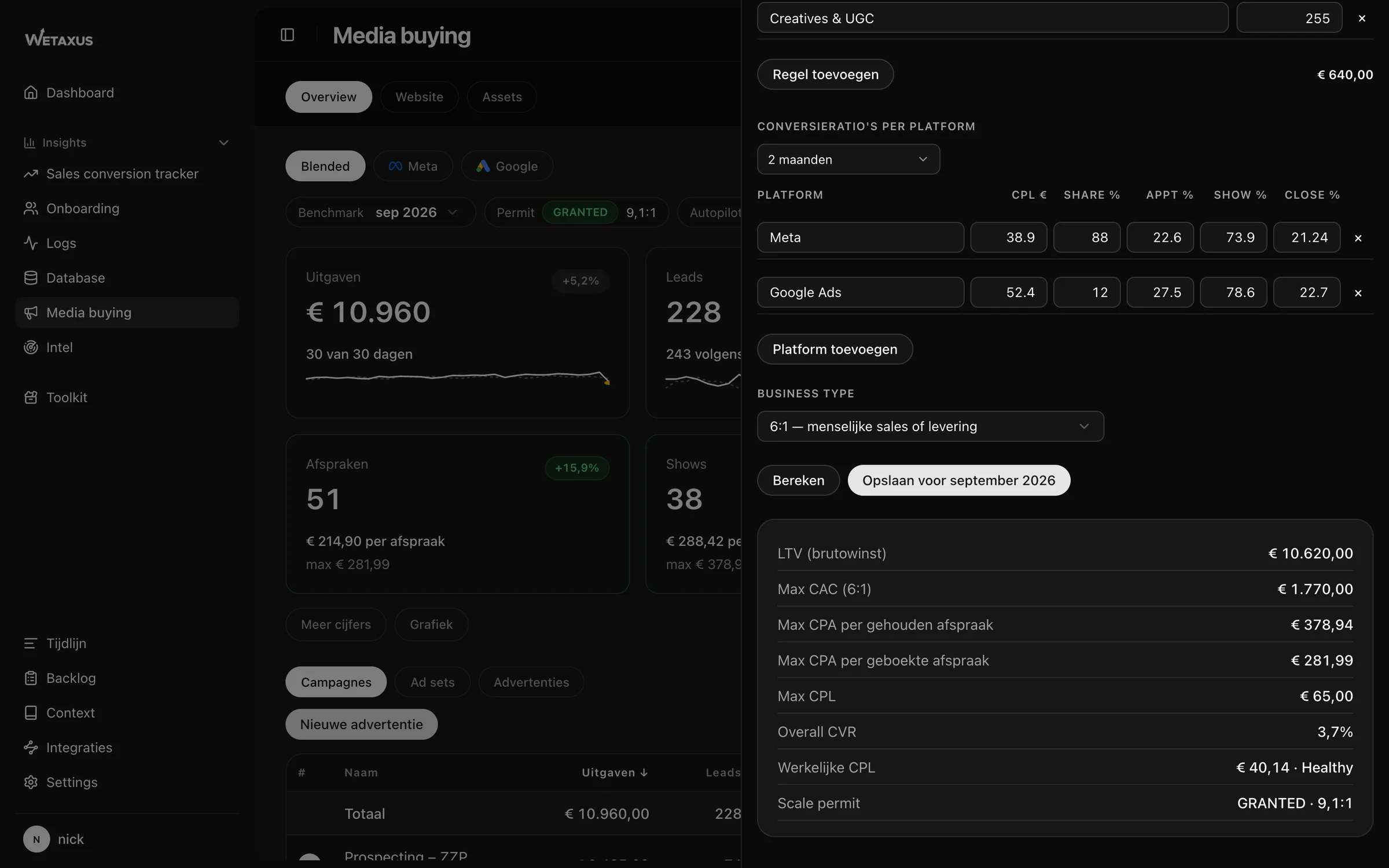
The first question was what a lead may cost. It is now answered by the MOVE Growth Benchmarks calculator, running inside the dashboard on Wetaxus' own numbers.
Every month the team fills in lifetime value, margin and funnel rates, prefilled from the core's own cohorts. The calculator turns them into a maximum cost per client, per appointment and per lead, for every channel, with Meta’s and Google’s own ceilings side by side, and a verdict: locked, hold or granted. Kill and scale laws follow from it.
- Stop an ad that spends three times the maximum cost per lead without a lead, or stays above one and a half times it for a week.
- Scale an ad set with five leads in seven days at 70% of the maximum or less.
- Never stop an ad that people still click.
An autopilot applies these laws once a day. After fourteen days in shadow mode it now runs live, and a ClickUp alarm goes off the moment an ad spends €20 without a lead.
€16k
lifetime value of a client
€65
maximum cost per lead
2.6k+
contacts in one core
984
appointments booked
The growth structure
Growth runs on three engines, and all three are measured in the same core.
Ads. A weekly batch of creatives goes from ClickUp to Meta in one click, paused until someone approves it. Every ad carries its campaign, ad set and ad id through the website into the core, and the Pixel and the Conversions API share one event id, so a booked meeting counts once and is credited to the ad that earned it. Google Ads now bids on the same signals: a filled-in form counts €25, a booked meeting €75 and a client a year of its fee, and the ad that brought someone in is kept until they book, even when they return days later through another page. More than €75k went into ads in a year, and every euro is traced to the meetings and clients it brought in.
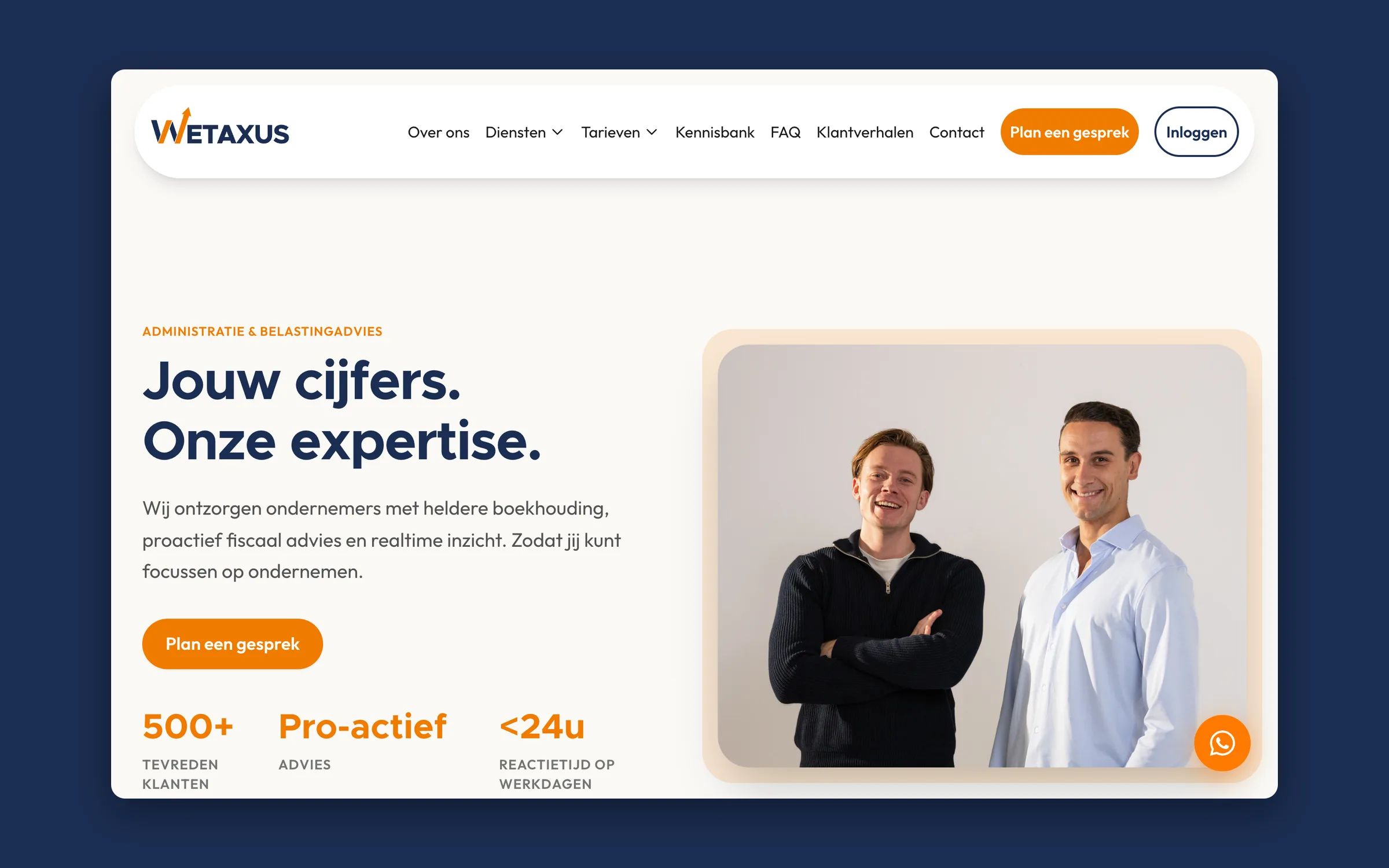
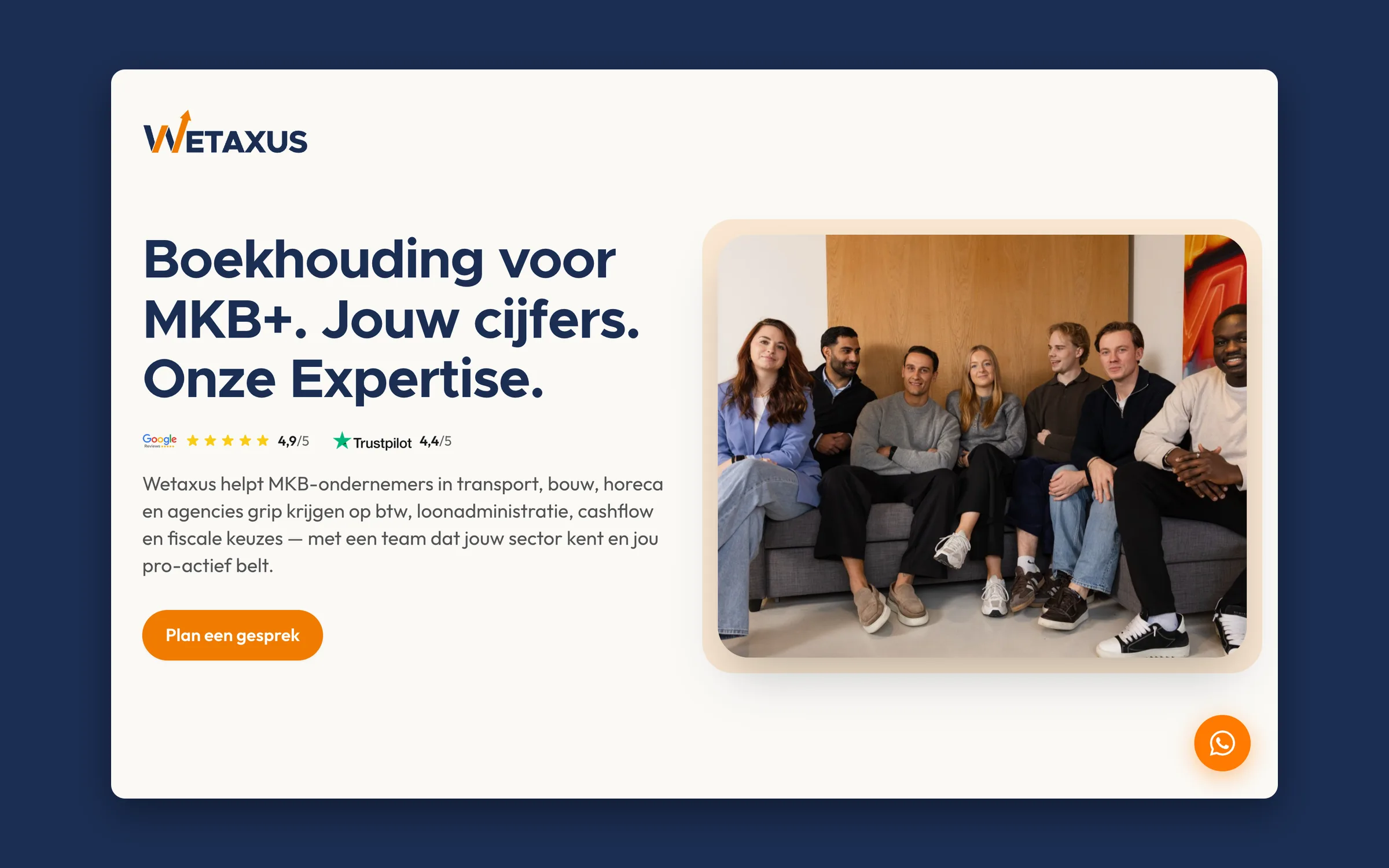
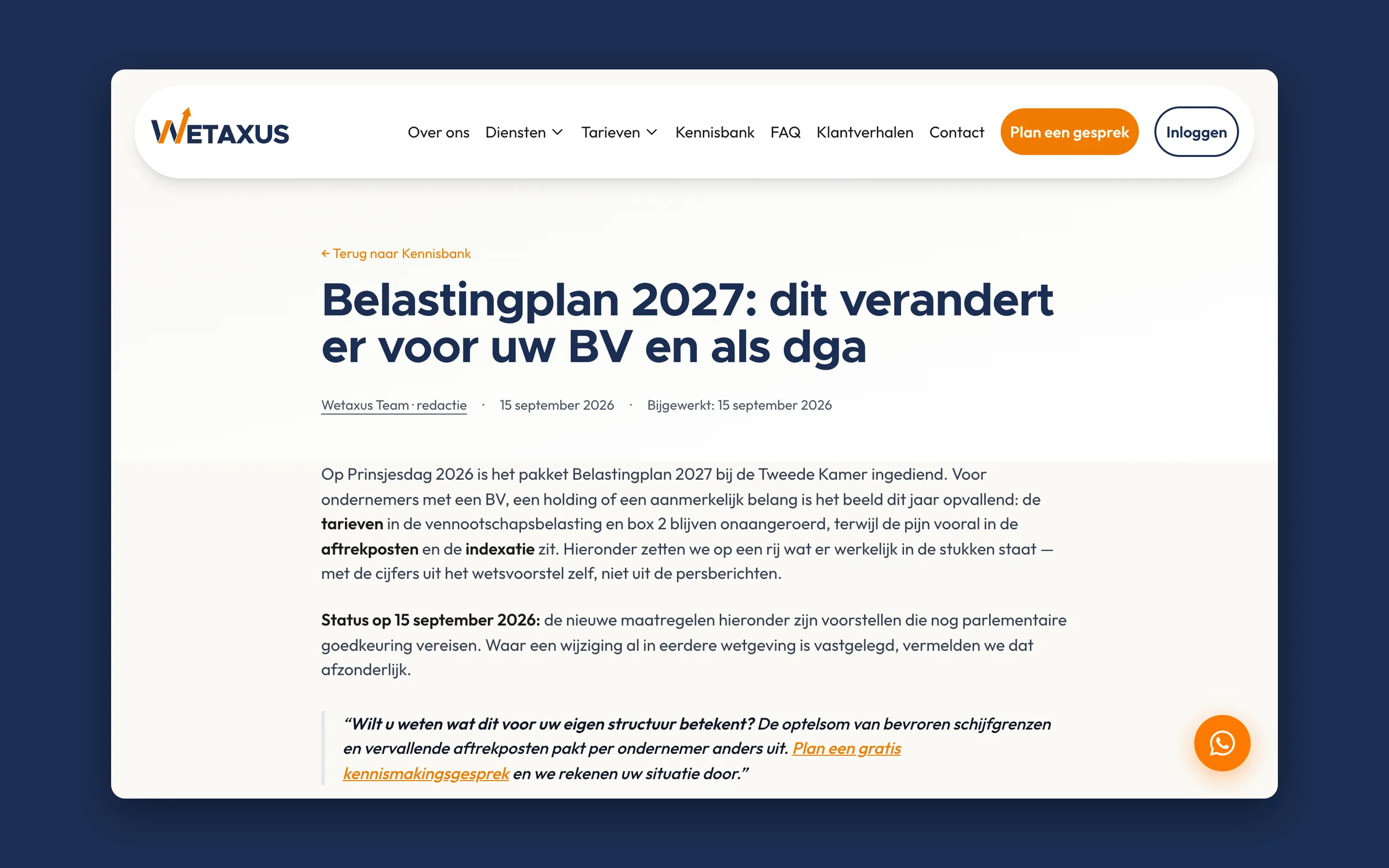
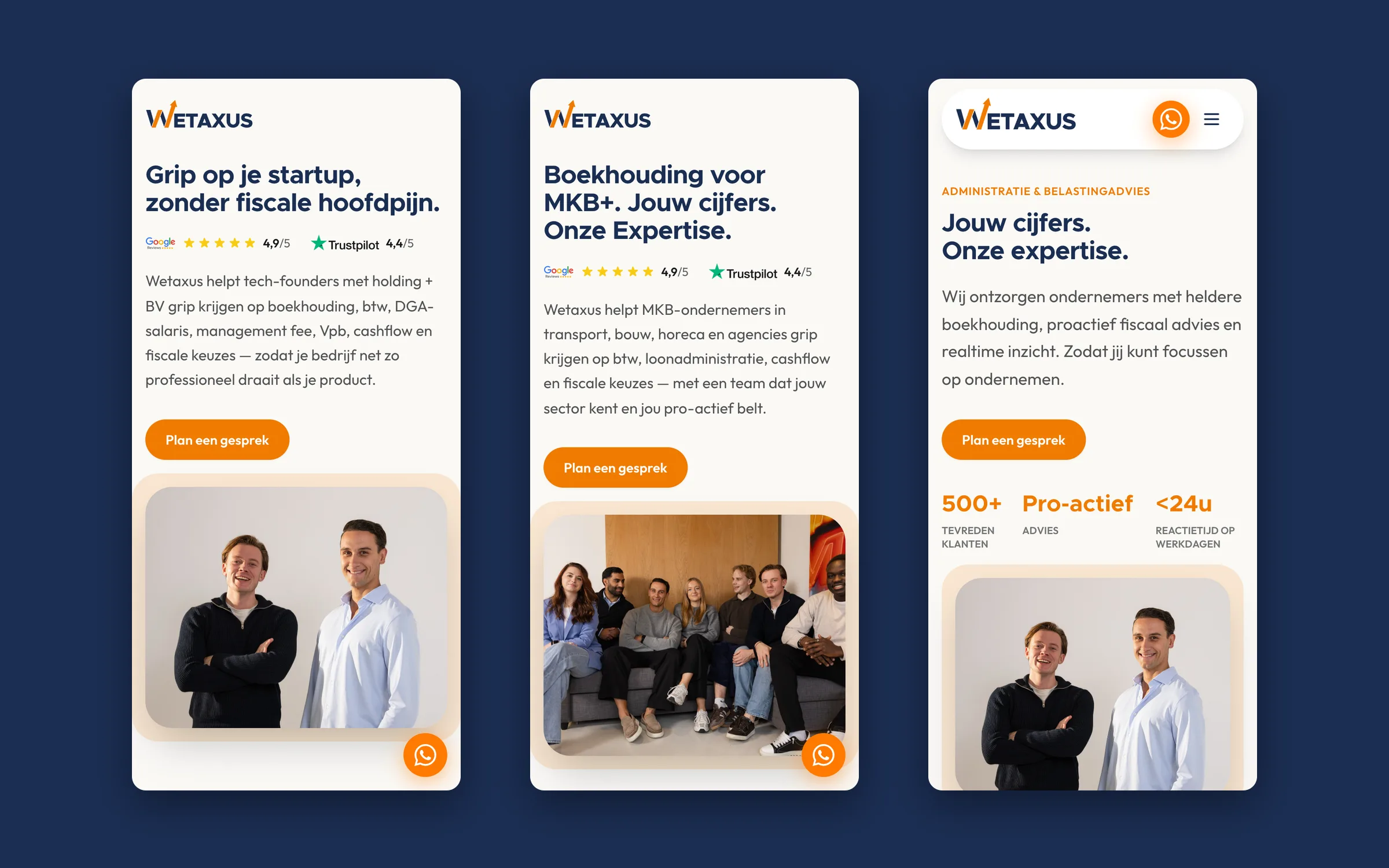
GEO and SEO. The website was rebuilt in Astro: 64 pages, 31 knowledge base articles, four landing pages that book a meeting on the page itself, and calculators for DGA salary, holdings and pricing. Each landing page is measured from the first scroll to the booked meeting, and the pricing calculator takes a BV and its holding in one request. It is written for AI search as much as for Google, with an llms.txt, a markdown version of every page for agents, structured data, and a GEO tab in the dashboard that counts every AI crawler.
Organics. A content engine that scales with the system: posts written from the knowledge base, rendered in the dashboard and planned in ClickUp, and iterated on data around the clock. A comment with HANDBOEK sends the tax handbook through ManyChat and tags the lead in Mailchimp.
Where it stands
Today Wetaxus runs on one core that knows every lead from the first click to the signed engagement, a team that works in one app, and growth that is judged by what a client is worth rather than what a click costs. Google conversions flow back from the core and the autopilot runs live. Next in line: a support agent that answers client questions with the right video from the portal.